Thursday, September 03, 2009

Pomo V

Last time we established the golden trilogy of popular postmodernism: authenticity, community and justice.

Authenticity
Like Christianity, postmodernism challenged the dangerous arrogance of the modernist worldview in imagining that human reason was supreme (the authority of the mind). Instead of authority, the ideal of authenticity should be pursued. It is the pursuit of identity and the search for self. It is life lived authentically to who you really are. According to Michael Jensen, people "want to live according to the truth of themselves as beings. This longing is partly in response to a sense that cultural conditions - technology, urbanisation, mass immigration - have made discovery of authenticity in life much harder, because our freedom has been so restricted."

It is in the respect that pomo can be described as relativist. What is authentic for me may be totally divergent to what is authentic for you, but that is OK in postmodernism as long as we're being 'true to ourselves.' There are issues with this (which I'll come back to later), but it is a response to so much in modern life that is manufactured and carefully spun (think of our politicians or the advertising industry). You'll find this value reflected in many new social mediums, particularly YouTube. The success in YouTube is that the content is real; the videos are not manufactured. Via YouTube I can show the authentic me to the whole world.

The ideal of authenticity is something that the church must come to terms with so that it can go forward in it's life and mission. What is up for grabs is the question of identity. Whilst postmodernism has raised this question, it doesn't provide easy answers. Michael Jensen has in fact observed several paradoxes in postmodern identity amongst 'Gen Y': biology vs dignity (am I just another animal, or do I have a special place as a human); narcissism vs self-loathing; self-discovery vs self-disappearance (the Internet allows us to disappear, to be anonymous); individualism vs. loneliness (the desire to be on or own can be seen in the growth of one bedroom flats. But it also comes at a time when people are more disconnected than ever before); consumption vs labour (Gen Y is relatively prosperous, and buys what it wants when they want to. They are also working longer hours than ever before); freedom vs intolerance (of moral choices); choice vs change anxiety; tradition vs. novelty (old is cool, sometimes. But so is the latest product from Apple); and global vs local.

With these tensions, pomo is still trying to answer the question 'Who am I?'. The church has exciting opportunity to articulate that my identity is found in Christ. The quest to find 'self' is achieved in denying ourselves and following Jesus: "If anyone would come after me, let him deny himself and take up his cross and follow me. For whoever would save his life will lose it, but whoever loses his life for my sake and the gospel's will save it." He is the authentic human and what he offers to those who would come after him is human life that is recovered (from evil and sin) and renewed. What he offers his disciples is the only way to know thy self.

Thursday, August 27, 2009

The Problem With Preaching III (a)

This video follows up quite neatly on what I said back here. Apologies for the speed.


AMENDMENT: See also 'The Problem with PowerPoint: 25 Years of PowerPoint' produced by the BBC.

Wednesday, August 26, 2009

Disciples and Citizens

A Guest Post by Alison Moffitt

I just read a fantastic book. It's called Disciples and Citizens (by Graham Cray) and it presented a vision for Christian living that incorporates both genuine Christian worship and radical community involvement.

I once did a geography subject called "Cities and Citizenship" and I think it was one of the best subjects I have ever taken. Our lecturer Kurt took us through a range of issues linked with citizenship in urban areas - social capital, social norms, everyday life - and applied them to different communities - the homeless, children, queer people. It was everything I wanted in a course, and ever since, it has got me thinking about how I should respond to all these issues as a Christian. Disciples and Citizens summed it all up in 190 pages - a fantastic fusion of Kurt's geography courses, second year sociology, every teaching I've ever received from 1 Corinthians and Philippians and a beautiful argument for the Christian hope as a bodily resurrection rather than an escape to an immaterial 'heaven'.

I wanted to share the following quote that was quoted in the book. It's long but so so good. It's a translated segment of a second century Christian manuscript, the Epistle to Diogenetus.
For the Christians are distinguished from other men neither by country, nor language, no the customs which they observe. For they neither inhabit cities of their own, nor employ a peculiar form of speech, nor lead a life which is marked out by any singularity... But inhabiting the Greek as well as barbarian cities, according as the lot of each of them has determined, and following the customs of the natives in respect to clothing, food, and the rest of their ordinary conduct, they display to us their wonderful and confessedly striking method of life. They dwell in their own countries, but simply as sojourners. As citizens, they share in all things with others, and yet endure all things as if foreigners. Every foreign land is to them as their native country, and every land of their birth as a land of strangers. They marry, as do all [others]; they beget children; but they do not destroy their offspring. They have a common table, but not a common bed. They are in the flesh, but they do not live after the flesh. They pass their days on earth, but they are citizens of heaven. They obey the prescribed laws, and at the same time surpass the laws by their lives... To sum up all in one word - what the soul is to the body, that are Christians in the world.
My challenge after reading this is to live a life that is true to this description, and to pray that the whole church will live like this. We need to be the salt of the earth, a city on a hill, and we need to be a vibrant and change-affecting part of the community. Don't hide the light of the gospel under bushels in church buildings!!

In the late 18th Century, a group of Christians from Clapham in England got serious about praying and bible reading and giving to the church. But it wasn't just an inward looking thing to build up their personal spirituality or build up the church. They also were super actively involved in the life of the London community, in sharing with the poor and getting super politically active. How politically active? The Christians from Clapham:
  • Encouraged education and supported the Sunday School movement for people with poor schooling
  • Supported the Factory Act to get children out of inhumane working conditions in factories
  • Founded the RSPCA
  • Fought against blood sports, gambling and dueling
  • Helped to establish the Church Missionary Society (Matt works for them now!)
  • Encouraged better administration in India and Sierra Leone
  • Led the movement to abolish the slave trade in India
So, Christians out there, ask yourself the following questions:
  • Have you ever written a letter to a politician about an issue you are concerned about? Why not?
  • Do you think that we don't need to look after the planet because is gets destroyed when Jesus comes back? Wake up! Jesus' resurrection has affirmed the goodness of creation, so we'd better look after the good things God made.
  • Do you get overwhelmed by the needs of the socially excluded? We have a fantastic role model in Jesus, his own Spirit empowering us to work here and now, and the promise of a future where justice is completely restored.
Read this book! I will lend it to you, even if you live in Western Australia! Even if you live in the USA.

Tuesday, August 25, 2009

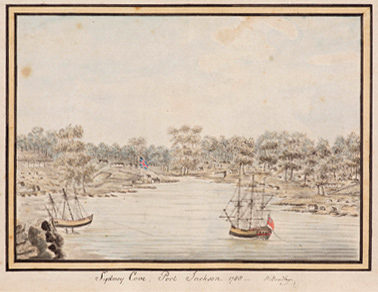
The Colony: A History Of Early Sydney

With recently renewed discussion about the history and occupation of Australia Grace Karskens' newly released "The Colony: A History Of Early Sydney" is a fresh and timely account of the origins of Sydney. Grace Karskens brings a personal touch to the book that I also found to be helpful.

Karskens, who worked as the Project Historian for the Cumberland Gloucester Street Archaeological Project, has produced a multidisciplinary book. This is one of the strengths of The Colony - besides using traditional historical and political accounts, Karskens addresses social history (including the history of women and convicts), environmental concerns, Aboriginal history and archaeology. It also sets Sydney Town in its context of being the center of surrounding settlements spread out across the Cumberland Plains. Drawing on Inga Clendinnen's earlier research, Karskens account of the indigenous experience of the British invasion and continued settlement is especially worth reading. Karskens herself is well aware that what she offers isn't the Aboriginal history of 1788, but it does go along way towards that.

The Colony also some way towards busting several myths that have arisen about the foundation of Sydney. The narrative presented by Robert Hughes in The Fatal Shore is well and truly in her sights. Karskens also spends sometime dealing with the 'foundational orgy' story and also the continued presence of Eora people in Sydney for several decades after 1788. Of particular note is Karskens reconstruction of the Minto massacre in 1816 of Aboriginal, elderly men, women and children.

My main gripe with it is the absence of religion in The Colony. Neither the religious beliefs of the Eora or the British were adequately dealt with. This doesn't mean that it isn't mentioned. On one occasion Karskens point to the Evangelical motives some officers had in educating Aboriginal children. But that's about it. Religion floats across the pages, but for a multidisciplinary work religion remains ungrounded. The Church of England clergy are presented only as farmers and country squires. As Meredith Lake has pointed out elsewhere, "there are...important questions about how post-christian Australians try to make sense (or not) of our Christian past."

Overall, I found the The Colony to be an insightful and read. It left me wanting to know more about Sydney's past, and was for me an extremely useful introduction to the Eora's experience of the invasion. If you only read one historical book each year, you should strongly consider this one.

Monday, August 24, 2009

Two Must Read Articles on Social Welfare in Sydney

Firstly, Stephen Judd (CEO Hammond Health Care) and Anne Robinson (Chair, World Vision) spoke on "Christianity and Australia’s Social Services" at Australia’s Christian Heritage National Forum, Parliament House, 2006. Their paper reveals some surprising results about the nature of non-government welfare providers in Australia, the United States and the United Kingdom. Less than a quarter of the top 25 US charities are Christian, in the UK there are only three such Christian agencies. In Australia by comparison, 23 of the top 25 non-profit organisations by income are Christian organisations - almost all focused on social services. Make sure you read this paper (h/t APK for drawing my attention to it).

Secondly, last Friday Peter Kell (CEO ANGLICARE Sydney) delivered the annual Richard Johnson Lecture at the University of Wollongong. It is well worth reading for what Kell says about 'social exclusion' and urban planning in Sydney. See also this.

Kell also sets out a rational for caring:
"For Christians, deeply aware of the nature of saving grace in their lives and the need to honestly question any personal motivation beyond a simple response to grace, the question of why we care is just as important as the question of how we care. And this is especially true also for an organisation like ANGLICARE, a Sydney Anglican
diocesan organisation charged with delivering care beyond the scope of individual Christians and the local church but, wherever possible, in partnership with them. ANGLICARE Sydney has always been committed to the reality that the gospel is the power of God for the salvation of everyone who believes. So it must first be said unequivocally, that for ANGLICARE the gospel is primary."
Kell goes onto quote Don Carson's sermon on 1 Cor. 15 at the 2007 Gospel Coalition Pastors’ Colloquium. According to Carson, the gospel is primary because it is:

  1. Christological: that is, that the gospel centres on the person and work (the life, death and resurrection) of Jesus Christ.
  2. Theological: The gospel tells us that sin is first and foremost an offence against God and that salvation is first to last the action of God, not our own.
  3. Biblical: The gospel is essentially the message of the whole Bible.
  4. Apostolic: The gospel is passed on to us by Jesus’ disciples as authoritative eyewitnesses.
  5. Historical: The gospel is not philosophy or advice on how to find God, but rather the news of what God has done in history to find and save us.
  6. Personal: The gospel must be personally believed and appropriated.
  7. Universal: The gospel is for every tongue, tribe, people and individual.
  8. Eschatological: The gospel includes the good news of the final transformation, not just the blessings we enjoy in this age.
I'm happy to say a hearty Amen! to this (although it is probably far too individualistic, and if you are going to talk about sin in the second point then I would also want to talk about evil). But I would add a ninth point: the gospel is primary because it is political. This has been touched on in several points, but I think it needs to be explicit. The gospel is primary because it is political: Jesus Christ is Lord. He is Lord over the evil powers, he is Lord over earthly powers, and he is Lord over my life. The gospel is political because it brings about the obedience of faith from among the nations and demands that I submit every aspect of my life to the Lordship of Christ. This makes the gospel primary and also provides a basis for caring - because Jesus isn't satisfied with just our souls, but demands also our heart, souls mind and strength in every part of our life.

Friday, August 21, 2009

I am the Very Model of a Modern Evangelical

I've been waiting for this for a long time. Thanks to my friend James, I finally have the words to "I am the very model of a modern evangelical". This was produced by some EUers in 2002 for Annual Conference and later for the AFES National Training Event.

If you try and sing, keep in mind that's it intended to be sung by two people. And although it is written to Gilbert and Sullivans "I am the very model of a modern Major-General", the words don't fit the music. There may also be longer versions out there, somewhere.


I am the very model of a modern evangelical

I am the very model of a modern evangelical
I have a Bible knowledge which is really quite incredible
I know my Stott and Carson, and I keep a copy by my bed,
Of Calvin's Insitutes, which I have not ... well which I might have read.
I keep all of my sermon tapes in order of chronology,
They help me with my grasp of all that Biblical theology
I have a Koorong discount ard, and so it isn't hard to tell...
That... I'm the very model of a modern evangelical...
(He is the very model of a modern evangelical x3)

I have been to KYC, Kyckstart, KYLC and MKC
And KEC and OKC, my favourite: WKC!
KYLC a few more times, but never will again, you see—
Because it falls far short of that eternal triumph... NTE

Well, I'm at Sydney Uni, ipso facto I am in EU,
I go to public meetings twice a week and every BBQ,
I lead a dozen small groups and I'm on a score of student teams,
I sometimes go to classes where I go to sleep and EU-dream...
I wait all year for NTE and for our Annual Conference,
But this I must submit to you in every bit of confidence,
That this guy here does more than me and so I guess I ought to tell...
That he is the very model of a modern evangelical!
(He is the very model of a modern evangelical x3)

I've had ninety seven girlfriends since I came to Christ three months ago
I had a few engagements and because the girls would come to know,
That I'm too old— I guess I very slowly had to come and see,
That evangelicals must marry off before they're twenty three...

Thursday, August 20, 2009

Pomo IV

Evangelical Christianity benefited greatly from modernism. Both arose out of the 18th century. Modernity was decidedly anti-Christian in it's praxis, yet evangelicalism shared many common features with it. In particular they shared an epistemological outlook that was "scientific" and rational: authority.

For two hundred and fifty years Evangelicals have benefited from a culture that talked in terms familiar to us. So the focus of much of our attention has been the authority and reliability of the scriptures. Postmodernism, however, is not as interested in authority. It understands such claims as a nasty meta narrative - a powerplay.

What do we as the church do. It is a very easy temptation to forget about the reliability and authority of the bible. This would be throwing out the baby with the bathwater (we don't believe in biblical authority because of cultural convenience). But rather than shouting "I am the way, the truth and the life" louder and louder at post moderns, there is a trilogy of ideas central to contemporary postmodernism that also important in Christianity: authenticity, justice and community. It's these three ideas that we shall explore next.

Thursday, August 13, 2009

Restitution

"Then it is at once our duty, and our wisdom to humble ourselves in penitence before God. But repentance supposes reformation, and where injuries have been inflicted it involves recompense….But the next step to reformation is restitution. And do we start at this word? It is one an honest man need never shrink from; it is one a noble mind will never discard; it is one which religious man will cheerfully adopt. It is our duty to recompense the Aborigines to the extent we have injured them." - John Saunders, ‘Claims of the Aborigines,’ a sermon preached at Bathurst Street Baptist Church, Sydney, 14 October 1838.
Peter Adam, in Monday night's Second Annual John Saunders lecture (available here) called for Australia (those who have arrived since 1788) to make recompense to Indigenous Australians. Following Richard Baxter, Adam argued that this needs to come through either through restitution (returning what was taken) or satisfaction (returning something of equivalent value where restitution isn’t possible). Adam then offered a practical proposal for recompense:
  1. We would recognize that recompense is a duty and responsibility, that we owe it to the indigenous peoples of this land, out of respect for them as our brothers and sisters made in God’s image [see Acts 17:26] and out of awareness of the vileness of the crimes which have been committed against them and their ancestors.
  2. We would recognize that recompense is based on our duty, not the needs of indigenous people. I am not saying that we should not care, but that we must act with integrity and justice [rather than being condescending].
  3. We would recognize that no recompense could ever be satisfactory, because what was done was so vile, so immense, so universal, so pervasive, so destructive, so devastating, and so irreparable.
  4. We would ask the indigenous people if they wanted those of us who have arrived since 1788 to leave (Baxter’s ‘Restitution’), or to provide an equivalent recompense (Baxter’s ‘Satisfaction’). Leaving would be a drastic and complicated action, but, as I have pointed out, it has happened in India, Africa, and Indonesia in the last sixty years.
  5. If we do not leave, then we would need to ask each of the indigenous peoples of this land what kind of recompense would be appropriate for them. This would be an extremely complicated and extensive task, but must be done.
  6. We would need to be prepared to give costly recompense, lest it trivialize what has happened.
  7. We would then need to adopt a national recompense policy, in the form of a Treaty. It would need to be implemented locally, according to the wishes of each indigenous tribe.
  8. By negotiation, it could be a one-off act of recompense, or it could be a constant and long-term series of acts of recompense.
  9. We could also implement voluntary recompense by churches in a coordinated way, and should include support of indigenous Christian ministry and training, as negotiated by the leaders of Christ’s indigenous people. Christian churches should lead the way in this, not least in supporting indigenous Christians and their ministries. For churches too have benefited from the land they use, and from income from those who have usurped the land.
Are Adam's propositions an appropriate way forward? How would you make it happen?The apology from the Commonwealth Government took an incredibly long time - how long can we wait for the government to make any moves on this issue?

Quoting Paul in Romans 13:8-10, Peter Adam finished with these words:
Love involves duty, as well as charity. We have wronged our neighbours. It is now time to pay our debts, to confess our sins, to give the recompense that we owe. We who know God’s great love in Christ should be the most active in loving others. May God strengthen us to love the Lord our God, and so to love our neighbours.

Tuesday, August 11, 2009

Thursday, August 06, 2009

Saul shall save my people from the hand of the Palestinians

My CMS Reflections

We've been reading 1 Samuel in bible study recently. I love this book, not least for the twists and nuances of the narrative (it is one of the oldest highly developed narratives around). There's plot development, and really complex characters. It's beautiful.

However, I've have a lurking nervousness in the back of mind as we've read further into the story. It's not 1 Samuel itself that makes me uneasy. Instead, it's knowing just how similar things are now as they were in Saul's time. What we know call the Gaza Strip has been a source of conflict in 1 Samuel as much as it has been in our time. Israelites are still fighting with the Philistines, although we call the Palestinians (you do know that Palestine comes from the word Philistine?).

Talking to a couple yesterday who've been ministering to Palestinian refugees in Jordan, there has been a real issue for Palestinian Christians. Still, in Arabic today Palestinians are called Philistines. It is a real issue for them, especially as they read the Old Testament.

Palestinian Christians have often been caught in the middle of Arab-Israeli conflict. Please pray for them.
"There is neither Jew nor Greek, there is neither slave nor free, there is no male and female, for you are all one in Christ Jesus. And if you are Christ's, then you are Abraham's offspring, heirs according to promise." - Galatians 3.28-29

Friday, July 31, 2009

Australia – whose land?

Alison has sent me the details for an interesting lecture Morling College is hosting in August. The
second annual John Saunders Lecture will feature Melbourne evangelical Peter Adams (Principal of Ridley College) touching on the subject “Australia – whose land?”

7.00 pm Monday 10th August
Morling College Chapel. 120 Herring Rd, Macquarie Park 2113
Admission free (an offering will be taken to support training of Indigenous Christian leaders).


Alison and I are keen to go. Anyone else? We've been reading the recently released 'The Colony - A History of Early Australia' by Grace Karskens. According to it's dust cover: he Colony is a unique portrait of Sydney from pre-contact Aboriginal times to the end of convict transports in 1840. From the coast across the Cumberland Plain to the rivers at the foot of the Blue Mountains, Grace Karskens presents a groundbreaking reinterpretation of the early history of Sydney. It is a richly textured approach that draws on social history, traditional political history, environmental concerns, Aboriginal history and archaeology."

It has got us wondering - Nat Swann too incidentally - Why don’t we acknowledge country in Christian circles? Should we acknowledge country at things like synod or at a KCC conference? I'd love to hear your thoughts.

Monday, July 27, 2009

What if...?

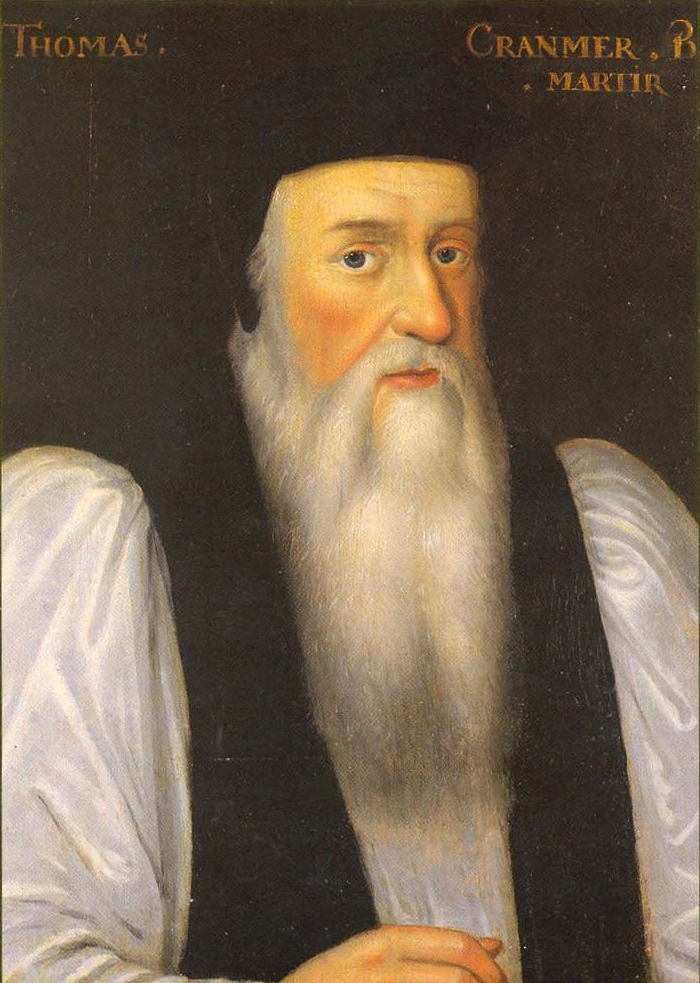
Diarmaid MacCulloch's Thomas Cranmer is a magisterial account of the great reformer and Archbishop. I read it in my first year of uni and it gave further fuel to a passion for Reformation history that I cultivated during high school. At the end of the book, MacCulloch speculates on what might happened had the reformers program for the English church continued beyond the death of Edward VI in 1553. It's not always helpful to engage in historical speculation, but MacCulloch's work has always stirred my imagination. Here is what how he thinks history may have panned out:
"What would the Church of England have looked like if, instead of Queen Mary's triumph, Queen Jane's quite reasonable hereditary claim to the throne had succeeded in establishing her regime? The Lady Mary would have had to have been effectively neutralized before Edward's death, and one fears the neutralizing her for good would have involved the block in a return to Henrician savagery. The Lady Elizabeth could have been married off to Lord Robert Dudley, a good catch for a royal bastard, and a good chance for them both of a happy love-match. Archbishop Cranmer, living to his allotted three score years and ten or beyond, could have produced the third version of his Prayer Book, in the light of friendly criticism from Continental reformers whom he respected, like Martyr, Bullinger, and Calvin; he would have been succeeded as Archbishop by Nicholas Ridley or Robert Holgate, with energetic young reformers like Edmund Grindal ready to make their mark and pick up good ideas from the best reformed churches of Europe. John Knox , mellowed by an increasing successful career in the Church of England would have been appoint Bishop of Newcastle, benevolently taking no notice of the advanced congregations in his diocese who received communion sitting; this was a practice in any case increasingly common throughout Jane's Church, despite Archbishop Cranmer's grumbles. The reform of canon law would have been achieved, the 1553 primer and catechism would have become standard, the Forty-Two Articles would have been unmodified by Elizabethan sacramentalist hesitations.

Out in the parishes, metrical psalms in the style of Geneva would quickly have spread: these were the best secret weapon of the English Reformation, making its public worship and private devotional practice genuinely popular throughout increasing areas of the kingdom. This congregational music music would have taken over in the cathedrals, now devoid of choirs or polyphony, and with their organs (where they survived) used mainly for entertainment, in the Dutch fashion. The conservative nobility would have continued the sullen public compliance which they had shown under Edward VI, their private celebration of ceremonial worship tolerated as eccentricity, like the Lady Elizabeth's patronage of choral music in her own chapel. The traditionalist higher clergy would have died off in senior Church offices and in the universities, with no possibility of like minded replacement: since the universities, with no major haemorrhage of exiles in the 1560's, the Jesuits and other religious orders would have found it difficult to recruit potential clergy to train for their attempt to treat Jane's England as a mission field. England would have become the most powerful political player in the Reformed camp, with Cranmer a cordial if geographically distant partner with John Calvin. There is a potent symbolism in the fact that it was Cranmer's son-in-law who translated Calvin's Institutes into English, and Cranmer's veteran printer who published it. With a Cranmer-Calvin axis, the profile of Reformed religion across the whole Continent would have been changed, and with the help and encouragement from Bishop Knox, the Reformation in Scotland might have followed a close path to that in the Reformed Church of England.

That is the history that never happened." - Thomas Cranmer, Diarmaid MacCulloch, pp 618-620.

Friday, July 24, 2009

Pomo III

Pomo usefulness 'a' - Modernism

Can anything useful come from postmodernism? This highly skeptical, highly relative ideology - doesn't it seek to destroy the very fabric of our society? These are charges that you may have heard about postmodernism. The fear behind them lies in the power of the necessary critique postmodernism has given to modernity. In preparation for this post, I've found it hard to find a concrete definition of what modernism actually is. The simplest definition that I can come up with is this: the narrative of progress.

Modernism told a great story of progress, enlightenment, and development, and insisted that this story — in which, of course, the Western world of the eighteenth century and subsequently was the hero — be imposed on the rest of the world, in a secular version of the Christian missionary enterprise that was burgeoning at exactly that time. It is the belief that a scientific approach and the authority of reason can solve all problems.
In fact, modernism argues that the major problem in the world isn't evil or sin, but ignorance (a malaise solved be education). The world will keep getting better and better, as long as we continue our pursuit of economic wealth and the secularization of society.

The West's idolization of modern secular democracy saw the centralization of society under the nation states. In a country like France which had a rich heritage of several regional cultures this had severe repercussions including the death of such cultural diversity. And many far flung lands where brought to heel under Western commercial and imperial ambitions - all in the name of progress, of course. Modernity implied a narrative about the way the world was. It was essentially an eschatological story. World history had been steadily moving toward, or at least eagerly awaiting, the point at which the industrial revolution and the philosophical enlightenment would burst upon the world bringing a new era of blessing for all. This narrative did bring benefits and improvements. But it has been conclusively shown to be an oppressive, imperialist, and self-serving construct. It has brought untold misery to millions in the industrialized West, and to billions in the rest of the world, where cheap labor and raw materials have been ruthlessly exploited. It is a story that serves the interest of Western industrial capitalism.

This story has also played havoc with the church. Under the guises of liberalism and Marxism (Marxism is the story of progress from aristocrats to the bourgeois and ultimately the dictatorship of the proletariat), Christianity was excluded from the public space. Irrational, irrelevant and out of date. Instead of these superstitions, we should be rationally lead by reason and logic. Science - the great herald of progress - became the greatest virtue of all. God was banished from the public discourse - the humans were no in charge and through their intellect nothing was impossible. The result being modernism has simply removed Christians who stood in stood in it's way, either by killing them or by attacking they're credibility and treating them like a cult.

In this instance, the enemy of our enemy is our friend. Postmodernism declares that all such large stories — “metanarratives” — are destructive and enslaving, and must be deconstructed. The pomo attack the gospel denying modernism is useful for us. Postmodernism is a necessary critique of modernity. But the current problem is that though the postmodern turn in philosophy and culture has sneered at the great modernist imperial dream, it hasn’t been able to shake it. We live in a time where modernity and postmodernity refer not so much to a datable chronological period but more to two different moods and controlling narratives. Our world is both modern and postmodern. And I don't see this changing for sometime. We can not go back to being just modern. And could postmodernism survive without the thing is it critiquing? The two ideas have become utterly dependent on each other.

It is into this 'vacuum' that Christianity must step in and be a light to the world. Like Paul, we must be ready to give a good account of our faith. The story he tells certainly is a grand overarching narrative, beginning with Israel and reaching out to embrace the world, but it is a story that leaves no human being, organization, or ethnic group in a position of power over others. It is the Jewish story, but it is not the typical Jew who says, “I am crucified with Christ; nevertheless I live; yet not I, but Christ lives in me.” This is the story precisely of how those who were kept as second-class citizens are now welcomed in on equal terms. This is a metanarrative like no other.

Tuesday, July 21, 2009

Pomo II

Tell me a Story...

I've been working on my pomo series, which will be continuing soon. As I've been working on it, I've been reminded again about the power of narrative. This has become a well laboured point in recent years. So it's important not to forget juts how much power stories have, especially in a culture that reduces everything to a narrative (and a power play). I hope to blog on this more fully, and I've enjoyed reading about from the likes of Wright, Bauckham and Vanhoozer. Here is Tom Wright making the case again:
“Stories are, actually, peculiarly good at modifying or subverting other stories and their worldviews. Where head-on attack would certainly fail, the parable hides the wisdom of the serpent behind the innocence of the dove, gaining entrance and favour which can then be used to change assumptions which the hearer would otherwise keep hidden away for safety. Nathan tells David a story about a rich man, a poor man, and a little lamb; David is enraged; and Nathan springs the trap. Tell someone to do something, and you change their life-for a day; tell someone a story and you change their life. Stories, in having this effect, function as complex metaphors. Metaphor consists in bringing two set of ideas close together, close enough for a spark to jump, but not too close, so that the spark, in jumping, illuminates for a moment the whole area around, changing perceptions as it does so. Even so, the subversive story comes close enough to the story already believed by the hearer for a spark to jump between them; and nothing will ever be quite the same again” (NTPG, p. 40).
Tell someone to do something, and you change their life-for a day; tell someone a story and you change their life. Taking the time to find the right story takes time and patience and creativity and - dare I say it - faith. But engaging with someone through story and allowing them to make the connections for themselves is the kind of thing that shapes people for life.

Saturday, July 11, 2009

The Problem With Preaching III

The Times, They Are A Changing...

It has been said that we stand at the dawn of a new era. As we seek to communicate Jesus and connect with stories, our culture is changing at a rapid pace - and this is why presentation in preaching is important.

We are witnessing the transition between two major communication eras. This is a pretty big deal, as they've only been two communication eras up to now. Firstly, there was the oral culture of communication. Secondly, the culture of writing with the invention of the alphabet and later, the printing press. And thirdly (now), the electronic era of communications, starting with Film and Television, where image became everything. If you think about it, such a major change in communications has only happened once before in human history. So it's no wonder that there is a crisis in today's preaching (and lots of other forms of content delivery).

According to Perth author and pastor Graham Johnston: "The force of the written word has diminished. Words carry no meaning. Enter the image. Images leave the viewer, not with carefully crafted ideas and precepts but with impressions."

Johnston overstates things when he says the power of the written word has diminished - I disagree with that. But he makes an important point about image. Since the rise of television, image and perception have become much more important in communication. And if we thought television had radically changed communication - along came the Internet. Effectively in the last decade the Internet has reshaped everything. Cultural critic Lee Siegel argues: "The Internet is possibly the most radical transformation of private and public life in the history of humankind."

The Internet: it's huge. And it changes everyday.It's changing the whole arena of communication and even society itself. The Internet is changing the people the church preaches to, especially young people. Because of this the Internet presents great challenges and possibilities for preaching today and tomorrow. To throw some perspective on this, it took radio 38 years to reach an audience of 50 million people. Television took 13 years, the Internet took 4 years, the i-Pod did it in 3 years and facebook did it in just 2 years. Internet use has even surpassed television viewing.

It's because of all these major developments that we go to the Internet and learn some lessons for preaching in today's world. There is more to come...