The Herald has an article on last night's lecture by Peter Adam: 'Australia - Whose Land?'
I'll blog about this later, but for now, check out the Herald's report and Chris Swann's far more helpful analysis.
UPDATE: Peter Adam has used parts of his lecture for an editorial in today's Herald.
Tuesday, August 11, 2009


Thursday, August 06, 2009
Saul shall save my people from the hand of the Palestinians
 My CMS Reflections
We've been reading 1 Samuel in bible study recently. I love this book, not least for the twists and nuances of the narrative (it is one of the oldest highly developed narratives around). There's plot development, and really complex characters. It's beautiful.
However, I've have a lurking nervousness in the back of mind as we've read further into the story. It's not 1 Samuel itself that makes me uneasy. Instead, it's knowing just how similar things are now as they were in Saul's time. What we know call the Gaza Strip has been a source of conflict in 1 Samuel as much as it has been in our time. Israelites are still fighting with the Philistines, although we call the Palestinians (you do know that Palestine comes from the word Philistine?).
Talking to a couple yesterday who've been ministering to Palestinian refugees in Jordan, there has been a real issue for Palestinian Christians. Still, in Arabic today Palestinians are called Philistines. It is a real issue for them, especially as they read the Old Testament.
Palestinian Christians have often been caught in the middle of Arab-Israeli conflict. Please pray for them.
"There is neither Jew nor Greek, there is neither slave nor free, there is no male and female, for you are all one in Christ Jesus. And if you are Christ's, then you are Abraham's offspring, heirs according to promise." - Galatians 3.28-29
Friday, July 31, 2009
Australia – whose land?
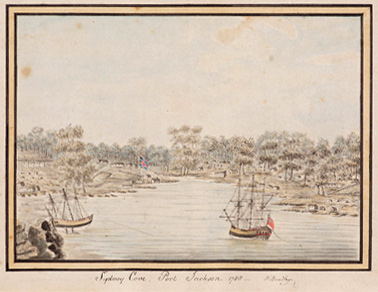 Alison has sent me the details for an interesting lecture Morling College is hosting in August. The
second annual John Saunders Lecture will feature Melbourne evangelical Peter Adams (Principal of Ridley College) touching on the subject “Australia – whose land?”
7.00 pm Monday 10th August
Morling College Chapel. 120 Herring Rd, Macquarie Park 2113
Admission free (an offering will be taken to support training of Indigenous Christian leaders).
Alison and I are keen to go. Anyone else? We've been reading the recently released 'The Colony - A History of Early Australia' by Grace Karskens. According to it's dust cover: he Colony is a unique portrait of Sydney from pre-contact Aboriginal times to the end of convict transports in 1840. From the coast across the Cumberland Plain to the rivers at the foot of the Blue Mountains, Grace Karskens presents a groundbreaking reinterpretation of the early history of Sydney. It is a richly textured approach that draws on social history, traditional political history, environmental concerns, Aboriginal history and archaeology."
It has got us wondering - Nat Swann too incidentally - Why don’t we acknowledge country in Christian circles? Should we acknowledge country at things like synod or at a KCC conference? I'd love to hear your thoughts.
Monday, July 27, 2009
What if...?
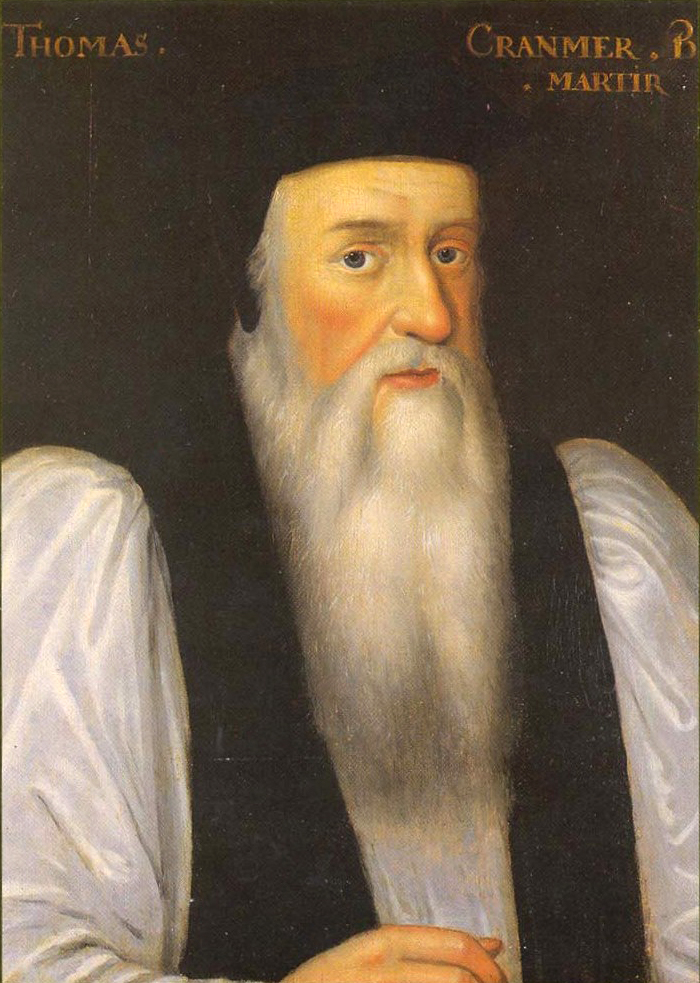 Diarmaid MacCulloch's Thomas Cranmer is a magisterial account of the great reformer and Archbishop. I read it in my first year of uni and it gave further fuel to a passion for Reformation history that I cultivated during high school. At the end of the book, MacCulloch speculates on what might happened had the reformers program for the English church continued beyond the death of Edward VI in 1553. It's not always helpful to engage in historical speculation, but MacCulloch's work has always stirred my imagination. Here is what how he thinks history may have panned out:
"What would the Church of England have looked like if, instead of Queen Mary's triumph, Queen Jane's quite reasonable hereditary claim to the throne had succeeded in establishing her regime? The Lady Mary would have had to have been effectively neutralized before Edward's death, and one fears the neutralizing her for good would have involved the block in a return to Henrician savagery. The Lady Elizabeth could have been married off to Lord Robert Dudley, a good catch for a royal bastard, and a good chance for them both of a happy love-match. Archbishop Cranmer, living to his allotted three score years and ten or beyond, could have produced the third version of his Prayer Book, in the light of friendly criticism from Continental reformers whom he respected, like Martyr, Bullinger, and Calvin; he would have been succeeded as Archbishop by Nicholas Ridley or Robert Holgate, with energetic young reformers like Edmund Grindal ready to make their mark and pick up good ideas from the best reformed churches of Europe. John Knox , mellowed by an increasing successful career in the Church of England would have been appoint Bishop of Newcastle, benevolently taking no notice of the advanced congregations in his diocese who received communion sitting; this was a practice in any case increasingly common throughout Jane's Church, despite Archbishop Cranmer's grumbles. The reform of canon law would have been achieved, the 1553 primer and catechism would have become standard, the Forty-Two Articles would have been unmodified by Elizabethan sacramentalist hesitations.
Out in the parishes, metrical psalms in the style of Geneva would quickly have spread: these were the best secret weapon of the English Reformation, making its public worship and private devotional practice genuinely popular throughout increasing areas of the kingdom. This congregational music music would have taken over in the cathedrals, now devoid of choirs or polyphony, and with their organs (where they survived) used mainly for entertainment, in the Dutch fashion. The conservative nobility would have continued the sullen public compliance which they had shown under Edward VI, their private celebration of ceremonial worship tolerated as eccentricity, like the Lady Elizabeth's patronage of choral music in her own chapel. The traditionalist higher clergy would have died off in senior Church offices and in the universities, with no possibility of like minded replacement: since the universities, with no major haemorrhage of exiles in the 1560's, the Jesuits and other religious orders would have found it difficult to recruit potential clergy to train for their attempt to treat Jane's England as a mission field. England would have become the most powerful political player in the Reformed camp, with Cranmer a cordial if geographically distant partner with John Calvin. There is a potent symbolism in the fact that it was Cranmer's son-in-law who translated Calvin's Institutes into English, and Cranmer's veteran printer who published it. With a Cranmer-Calvin axis, the profile of Reformed religion across the whole Continent would have been changed, and with the help and encouragement from Bishop Knox, the Reformation in Scotland might have followed a close path to that in the Reformed Church of England.
That is the history that never happened." - Thomas Cranmer, Diarmaid MacCulloch, pp 618-620.
Friday, July 24, 2009
Pomo III
 Pomo usefulness 'a' - Modernism
Can anything useful come from postmodernism? This highly skeptical, highly relative ideology - doesn't it seek to destroy the very fabric of our society? These are charges that you may have heard about postmodernism. The fear behind them lies in the power of the necessary critique postmodernism has given to modernity. In preparation for this post, I've found it hard to find a concrete definition of what modernism actually is. The simplest definition that I can come up with is this: the narrative of progress.
Modernism told a great story of progress, enlightenment, and development, and insisted that this story — in which, of course, the Western world of the eighteenth century and subsequently was the hero — be imposed on the rest of the world, in a secular version of the Christian missionary enterprise that was burgeoning at exactly that time. It is the belief that a scientific approach and the authority of reason can solve all problems. In fact, modernism argues that the major problem in the world isn't evil or sin, but ignorance (a malaise solved be education). The world will keep getting better and better, as long as we continue our pursuit of economic wealth and the secularization of society.
The West's idolization of modern secular democracy saw the centralization of society under the nation states. In a country like France which had a rich heritage of several regional cultures this had severe repercussions including the death of such cultural diversity. And many far flung lands where brought to heel under Western commercial and imperial ambitions - all in the name of progress, of course. Modernity implied a narrative about the way the world was. It was essentially an eschatological story. World history had been steadily moving toward, or at least eagerly awaiting, the point at which the industrial revolution and the philosophical enlightenment would burst upon the world bringing a new era of blessing for all. This narrative did bring benefits and improvements. But it has been conclusively shown to be an oppressive, imperialist, and self-serving construct. It has brought untold misery to millions in the industrialized West, and to billions in the rest of the world, where cheap labor and raw materials have been ruthlessly exploited. It is a story that serves the interest of Western industrial capitalism.
This story has also played havoc with the church. Under the guises of liberalism and Marxism (Marxism is the story of progress from aristocrats to the bourgeois and ultimately the dictatorship of the proletariat), Christianity was excluded from the public space. Irrational, irrelevant and out of date. Instead of these superstitions, we should be rationally lead by reason and logic. Science - the great herald of progress - became the greatest virtue of all. God was banished from the public discourse - the humans were no in charge and through their intellect nothing was impossible. The result being modernism has simply removed Christians who stood in stood in it's way, either by killing them or by attacking they're credibility and treating them like a cult.
In this instance, the enemy of our enemy is our friend. Postmodernism declares that all such large stories — “metanarratives” — are destructive and enslaving, and must be deconstructed. The pomo attack the gospel denying modernism is useful for us. Postmodernism is a necessary critique of modernity. But the current problem is that though the postmodern turn in philosophy and culture has sneered at the great modernist imperial dream, it hasn’t been able to shake it. We live in a time where modernity and postmodernity refer not so much to a datable chronological period but more to two different moods and controlling narratives. Our world is both modern and postmodern. And I don't see this changing for sometime. We can not go back to being just modern. And could postmodernism survive without the thing is it critiquing? The two ideas have become utterly dependent on each other.
It is into this 'vacuum' that Christianity must step in and be a light to the world. Like Paul, we must be ready to give a good account of our faith. The story he tells certainly is a grand overarching narrative, beginning with Israel and reaching out to embrace the world, but it is a story that leaves no human being, organization, or ethnic group in a position of power over others. It is the Jewish story, but it is not the typical Jew who says, “I am crucified with Christ; nevertheless I live; yet not I, but Christ lives in me.” This is the story precisely of how those who were kept as second-class citizens are now welcomed in on equal terms. This is a metanarrative like no other.
Tuesday, July 21, 2009
Pomo II
Tell me a Story...
I've been working on my pomo series, which will be continuing soon. As I've been working on it, I've been reminded again about the power of narrative. This has become a well laboured point in recent years. So it's important not to forget juts how much power stories have, especially in a culture that reduces everything to a narrative (and a power play). I hope to blog on this more fully, and I've enjoyed reading about from the likes of Wright, Bauckham and Vanhoozer. Here is Tom Wright making the case again:
I've been working on my pomo series, which will be continuing soon. As I've been working on it, I've been reminded again about the power of narrative. This has become a well laboured point in recent years. So it's important not to forget juts how much power stories have, especially in a culture that reduces everything to a narrative (and a power play). I hope to blog on this more fully, and I've enjoyed reading about from the likes of Wright, Bauckham and Vanhoozer. Here is Tom Wright making the case again:
“Stories are, actually, peculiarly good at modifying or subverting other stories and their worldviews. Where head-on attack would certainly fail, the parable hides the wisdom of the serpent behind the innocence of the dove, gaining entrance and favour which can then be used to change assumptions which the hearer would otherwise keep hidden away for safety. Nathan tells David a story about a rich man, a poor man, and a little lamb; David is enraged; and Nathan springs the trap. Tell someone to do something, and you change their life-for a day; tell someone a story and you change their life. Stories, in having this effect, function as complex metaphors. Metaphor consists in bringing two set of ideas close together, close enough for a spark to jump, but not too close, so that the spark, in jumping, illuminates for a moment the whole area around, changing perceptions as it does so. Even so, the subversive story comes close enough to the story already believed by the hearer for a spark to jump between them; and nothing will ever be quite the same again” (NTPG, p. 40).Tell someone to do something, and you change their life-for a day; tell someone a story and you change their life. Taking the time to find the right story takes time and patience and creativity and - dare I say it - faith. But engaging with someone through story and allowing them to make the connections for themselves is the kind of thing that shapes people for life.
Saturday, July 11, 2009
The Problem With Preaching III
 The Times, They Are A Changing...
It has been said that we stand at the dawn of a new era. As we seek to communicate Jesus and connect with stories, our culture is changing at a rapid pace - and this is why presentation in preaching is important.
We are witnessing the transition between two major communication eras. This is a pretty big deal, as they've only been two communication eras up to now. Firstly, there was the oral culture of communication. Secondly, the culture of writing with the invention of the alphabet and later, the printing press. And thirdly (now), the electronic era of communications, starting with Film and Television, where image became everything. If you think about it, such a major change in communications has only happened once before in human history. So it's no wonder that there is a crisis in today's preaching (and lots of other forms of content delivery).
According to Perth author and pastor Graham Johnston: "The force of the written word has diminished. Words carry no meaning. Enter the image. Images leave the viewer, not with carefully crafted ideas and precepts but with impressions."
Johnston overstates things when he says the power of the written word has diminished - I disagree with that. But he makes an important point about image. Since the rise of television, image and perception have become much more important in communication. And if we thought television had radically changed communication - along came the Internet. Effectively in the last decade the Internet has reshaped everything. Cultural critic Lee Siegel argues: "The Internet is possibly the most radical transformation of private and public life in the history of humankind."
The Internet: it's huge. And it changes everyday.It's changing the whole arena of communication and even society itself. The Internet is changing the people the church preaches to, especially young people. Because of this the Internet presents great challenges and possibilities for preaching today and tomorrow. To throw some perspective on this, it took radio 38 years to reach an audience of 50 million people. Television took 13 years, the Internet took 4 years, the i-Pod did it in 3 years and facebook did it in just 2 years. Internet use has even surpassed television viewing.
It's because of all these major developments that we go to the Internet and learn some lessons for preaching in today's world. There is more to come...
Tuesday, July 07, 2009
The Problem With Preaching II
Presentation Matters
One of the problems with preaching today is that presentation matters. Actually, what I mean is that presentation is important, and we're neglecting it. As good Evangelicals we have a strong view of scripture: that is powerful and change peoples lives. We believe in the centrality of the word in preaching, empowered by the Spirit. We believe in good exegesis that is driven entirely by God's word. So does presentation matter?
My answer is yes, it does. In preparing our sermons we spend so much time working out our three points (preferably alliterated), a humorous introduction and some sort of application at the end that includes Jesus. And what we are producing is an half-hour essay that has been fitted into that format and read out loud. We need to do better than this.
But before I go further, I must say two things.
Back in 2007 Joshua went into a Washington subway with a violin. Wearing jeans and a cap, he started busking. In the 45 minutes he played, 1097 people passed by. Hardly anyone stopped and only 27 people gave money. All up he earned $32, less than a dollar a minute.
Away from the subway, Joshua Bell is an accomplished violinist - one of the modern worlds great. A couple of days earlier, playing a violin handcrafted in 1713, valued at $4 million, he’d packed Boston’s - Stately Symphony Hall to great acclaim. Tickets were $120 each. He earned $1,200 a minute!
Same bloke... same violin… same pieces of music… same brilliant performance…His presentation of himself and his performance - were the only variables.
Presentation matters! Presentation counts! Preaching a 30 minute essay isn't good enough any more. We need to prepare what not just what we say, but how we say it. If we should learn anything from the 2008 US Presidential campaign, great oratory and careful presentation is powerful. It can lead you to the most powerful office in the land (although Abraham Lincoln had already taught us the power of words: his Gettysburg Address, arguably the greatest speech in American history, was over in just two minutes). But for us who proclaim the resurrected Jesus, it's never just about great oratory. The best sermons are personal and authentic.
Preaching like this has great potential. According to the great author on preaching, Haddon Robinson:
There is more to come...
One of the problems with preaching today is that presentation matters. Actually, what I mean is that presentation is important, and we're neglecting it. As good Evangelicals we have a strong view of scripture: that is powerful and change peoples lives. We believe in the centrality of the word in preaching, empowered by the Spirit. We believe in good exegesis that is driven entirely by God's word. So does presentation matter?
My answer is yes, it does. In preparing our sermons we spend so much time working out our three points (preferably alliterated), a humorous introduction and some sort of application at the end that includes Jesus. And what we are producing is an half-hour essay that has been fitted into that format and read out loud. We need to do better than this.
But before I go further, I must say two things.
- Presentation means more than eloquent words. The Apostle Paul was quite clear that when we taught it wasn't going to be the beauty of his words that changed lives (see 1 Cor. 2.1-2). Presenting when doesn't mean we sell out to a rhetorical exercise. It's about serving God well; and some of the preaching in the church today just 'doesn't cut the mustard'.
- Presentation is doesn't necessarily equal spin. In a world were people are cynical of most things that they hear, preaching spin would be far more dangerous than delivering a 30 minute essay. The best preaching is personal. As I will explain in the pomo series, good presentation requires authenticity, not spin.
Back in 2007 Joshua went into a Washington subway with a violin. Wearing jeans and a cap, he started busking. In the 45 minutes he played, 1097 people passed by. Hardly anyone stopped and only 27 people gave money. All up he earned $32, less than a dollar a minute.
Away from the subway, Joshua Bell is an accomplished violinist - one of the modern worlds great. A couple of days earlier, playing a violin handcrafted in 1713, valued at $4 million, he’d packed Boston’s - Stately Symphony Hall to great acclaim. Tickets were $120 each. He earned $1,200 a minute!
Same bloke... same violin… same pieces of music… same brilliant performance…His presentation of himself and his performance - were the only variables.
Presentation matters! Presentation counts! Preaching a 30 minute essay isn't good enough any more. We need to prepare what not just what we say, but how we say it. If we should learn anything from the 2008 US Presidential campaign, great oratory and careful presentation is powerful. It can lead you to the most powerful office in the land (although Abraham Lincoln had already taught us the power of words: his Gettysburg Address, arguably the greatest speech in American history, was over in just two minutes). But for us who proclaim the resurrected Jesus, it's never just about great oratory. The best sermons are personal and authentic.
Preaching like this has great potential. According to the great author on preaching, Haddon Robinson:
"The effectiveness of our sermons depends on two factors; (of course)what we say – but how we say it...The age of the preacher is gone, the age of the communicator has arrived".
There is more to come...
Monday, July 06, 2009
The Problem With Preaching: What The Preachers Say
 It seems that there is a crisis in preaching. How often do you hear church goers complaining about the length of the sermon? Or how boring it is? Or how irrelevant it is? I heard Leigh Hatcher talk about 'Preaching in a 'look at me' world', and I'll try and post some of his thoughts up here. But to set the scene, here are some thoughts on preaching by some well known contemporary preachers.
John Stott:
"The standard of preaching in the modern world is deplorable. There are few great preachers."John Woodhouse:
"Much of modern preaching is deadly dull, and we long to hear preaching that is alive."Peter Jensen:
"We need to look again at what we do in church, our reading, our prayers, (YES!!) our preaching."Bryan Chapel:
Congregational interest in any message is a minor miracle - that no minister should ever take for granted."Martyn Lloyd Jones, on the British experience going back to the 1960’s!!:
"Many of the younger reformed men in Britain are very good men who have no doubt read a great deal, and are very learned, but they are very dull boring preachers."Richard A. Jensen:
"There’s a crisis - in the theory and practice of preaching."
Saturday, July 04, 2009
Pomo
 Postmodernism. The word is enough to send shivers down some peoples spines. For others it's not so much a shiver but a long groan. And for others there is nothing sweeter or better than post modernity. I've believe the same attitudes are alive in the church. Same people will tell you that the greatest danger facing the church today is the rise of postmodernism - it is the great evil of the age. Others will tell you that the hope and future of the church lies down the path of the postmodernists.
Being a good Anglican, I want to avoid both extremities. I think that postmodernism has some helpful ideas that the church should grapple and engage with - the quest for justice, community and authenticity for starters. And I think that there are some things within post modernity that the church must hold fast on and say no, such as the apathy and ambiguity ingrained into today's pomo culture. And when this is all said and down, there are some valuable things that the could church to pick up- narrative, and an ally against that great enemy of the church: modernism.
There is an urgency in all this. It's very easy to dismiss pomo, and even claim that we've moved on - we're post post modern - which I think is such a post modern thing to say. What I have think has happened is that post modernism started off as an academic critique of modernism in literature, history, justice etc in the mid 20th century. From that time it has slowly worked it's way through our culture and society until today - where it now is part of our social conscience.
And the urgency is that this is no more true than in today's 'gen y' and 'gen z'. These are generations where post modernism has been ingrained into their very fibre. So over he coming weeks I'm planning to post about some helpful things in post modernism, some not so helpful things, and how the church should respond to this. And I'm keen to hear what you have to say about all this - so feel free to comment.
Friday, July 03, 2009
Marriage: quote unquote...
 Here are some quotes about marriage that I thought were worth posting here. They come from St Philip's York Street's study on 'The Resurrection and the Sanctity of Marriage'. h/t Justin.
SOME QUOTES:
"In the presence of God, I take you to be my wife, To have and to hold from this day forward, For better, for worse, for richer, for poorer, in sickness and in health, To love and to cherish, till death us do part; This is my solemn vow and promise." - Wedding Vows
"Your love is your own private possession, but marriage is more than something personal — it is a status, an office. Just as it is the crown, and not merely the will to rule, that makes the king, so it is marriage, and not merely your love for each other, that joins you together in the sight of God and man. As high as God is above man, so high are the sanctity, the rights, and the promise of love. It is not your love that sustains the marriage, but from now on, the marriage that sustains your love." - Dietrich Bonheoffer
"Let your religion be less of a theory and more of a love affair." - G. K. Chesterton
"... in our present culture, sexual activity has become almost completely detached from the whole business of building up communities and relationships, and has degenerated simply into a way of asserting one's right to choose one's own pleasure in one's own way. To put it starkly: instead of being a sacrament, sex has become a toy." - Tom Wright
Friday, June 26, 2009
Why We're Still Talking About Calvin
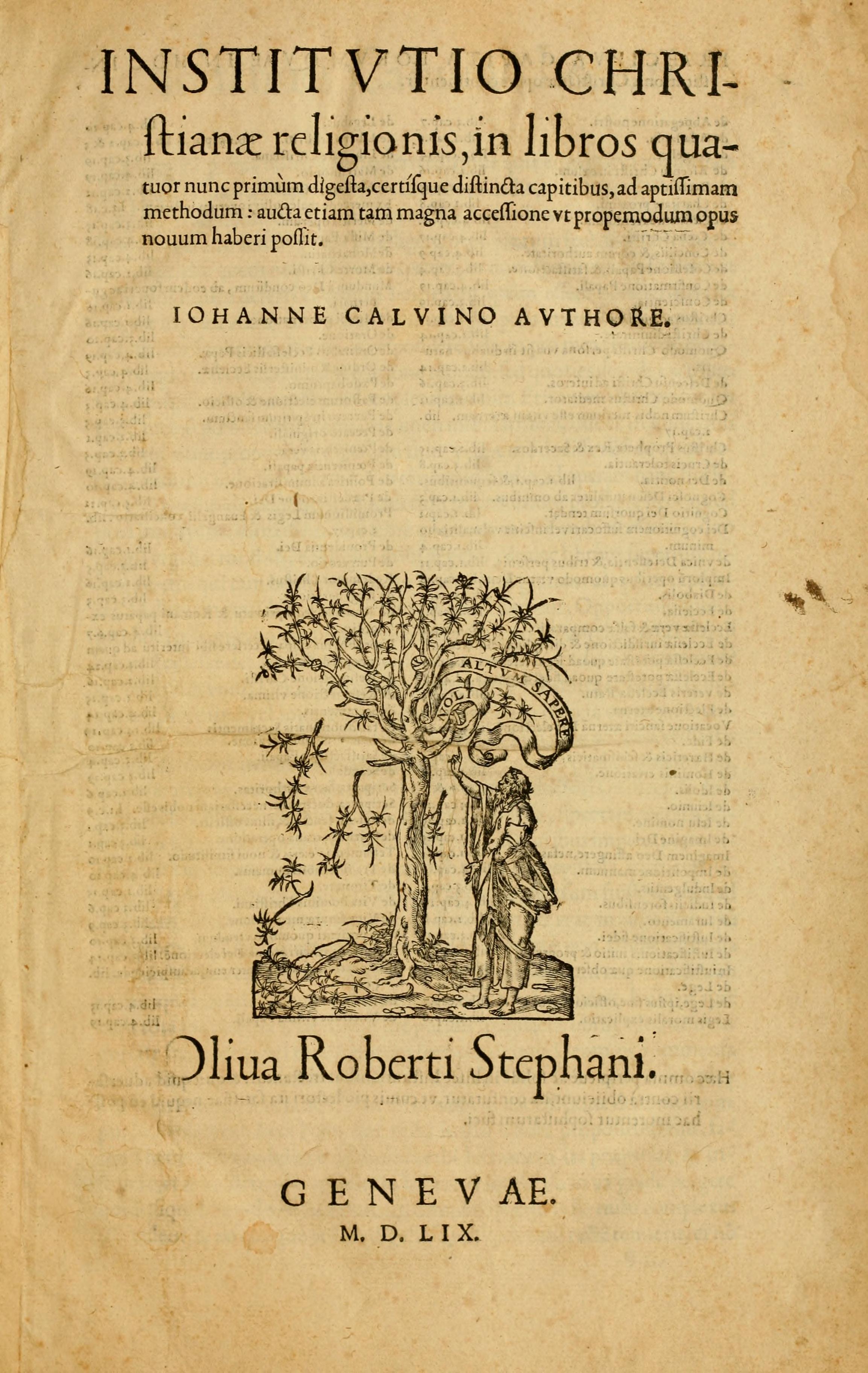 In case you missed it, Michael Jensen had a great op-ed in yesterday's Australian on the decline of Calvin. The quote from Pulitzer prize-winning novelist Marilynne Robinson on Calvin's influence is worth repeating:
"Any reader of the Institutes must be struck by the great elegance, the gallantry, of its moral vision, which is more beautiful for the resolution with which its theology embraces sorrow and darkness.In reading Michael's op-ed, I was reminded of something I've been intending to mention for a while now. My friend Angus Courtney submitted his honours thesis last year in history. Not only is it a superb piece of work on the 17th Century English Civil and republicanism, but it provides a paradigm shifting argument against the weight of recent historical scholarship. Angus argues that although the puritans (a label many historians have conveniently avoided using when describing the republicans) were well versed in classics, they lived and breathed the bible and Calvinist theology. Here is an excerpt:
...There are things for which we in this culture clearly are indebted to him, including relatively popular government, the relatively high status of women, the separation of church and state, what remains of universal schooling and, while it lasted, liberal higher education, education in the humanities. How easily we forget."
"The defining mark of the historiography of English republicanism is its insistence on the classical basis of English republican ideas. Drawing on the theorists of Greece and Rome––the argument goes––a handful of English writers in the mid seventeenth century articulated a vision of republican government infused with classical ideas and values. It is not an unreasonable argument, particularly considering that a number of English republicanism’s central writers, like John Milton, were prolific classicists who were widely familiar with ancient political theorists and historians. Just as significantly, they lived in extraordinary times that sparked an immense body of political re-examination.2 The result was to be a rich tapestry of republican thinking that was unparalleled in the seventeenth century. It was a unique (if fleeting) moment in English political history, in which ideas were developed that would become essential to eighteenth century political thought in England, the Continent, and America...But this approach makes a serious category error. The essential character of English republicanism was not classical. Although English republicans were familiar with classical texts and referred to––as Sidney put it––the ‘great masters of human reason’, these writers were rarely their primary authority, nor was their example primarily the republics of Greece or Rome. If we are prepared to take Milton at his word (as historians have been), this point is unmistakable. According to Milton, ‘The English people…were not inflamed with the empty name of liberty by a false notion of virtue and glory, or senseless emulation of the ancients.’ Rather, they formulated their republican vision and waged war against the king because of their purity of life and blameless character, in an effort to defend law and religion, rooted in a firm trust in God. At its core, English republicanism was a religious republicanism: a Puritan vision of total reformation that extended not only through the church but also to government. It was a vision inspired by Biblical Scripture, directed towards the godliness of the nation and the glory of God.
The radical nature of this proposition warrants its restatement: English republicanism was religious republicanism. Its central thrust was not towards classical republican government, but the government of God. Its purpose was not civic glory, but the godliness of the community for the glory of God. Regarding English republicanism as primarily classical is to overlook the context in which republicanism developed, the explicit goals for which it was used, and the clear biblical arguments that were used to justify its imposition. To appropriate a biblical metaphor, this overlooking of such a critical aspect is akin to having ‘strain[ed] out a gnat but swallow[ed] a camel.’ My assertion is not that classical republican ideas were absent from the English republican vision. Rather, it is that a much more significant aspect has been overlooked. This is an error in need of correction. We must recover the essential religious component of the English republican vision.
Wednesday, June 24, 2009
Disagreeing Well: Gregory the Great
Here is a wonderful example of why we still need to read books by dead people (h/t Michael - although admittedly it comes as a quote from a contemporary book). Gregory the Great (540-604) writes:
"Provided that it is in good faith, then, it is a mark of virtue to put up with superiors' faults. One should, nevertheless, if there is any prospect that the offending trait could be emended, make a humble suggestion to that effect. Yet one should take great care, when defending justice, not to go too far and cross the threshold of arrogance; not, in an ill-judged love of right, to forfeit humility, the mistress of right; not to forget that the person of whose action one happens to be critical is in fact one's senior. Subjects will discipline their minds to guard humility and avoid the swelling of pride, if they keep an incessant watch on their own weaknesses.
For we neglect to examine our own strength honestly; and because we believe ourselves stronger than we really are, we judge our superiors severely. The less we know of ourselves, the more our field of vision is occupied by those whom we aspire to criticize." - Gregory the Great (540-604) Moralia, Book 25:16:36 in From Irenaeus to Grotius" ed O'Donovan and O'Donovan p. 202.
One of the most valuable things I learned at uni was: it is very easy to be right. It's much harder to be right and still be gracious and loving. Especially in the Sydney Evangelical culture in which I live (which I love, by the way). Yet that is what Paul urges us to do:
"I therefore, a prisoner for the Lord, urge you to walk in a manner worthy of the calling to which you have been called, with all humility and gentleness, with patience, bearing with one another in love, eager to maintain the unity of the Spirit in the bond of peace. There is one body and one Spirit—just as you were called to the one hope that belongs to your call—one Lord, one faith, one baptism, one God and Father of all, who is over all and through all and in all." Ephesians 4.1-6
Monday, June 22, 2009
Mission Exists Because Worship Doesn't?
 The phrase "Mission exists because worship doesn't" has been often used in recent years to give a justification for mission. John Piper coined this phrase in response to Christians who feel ashamed or embarrassed about the strong conversionism tendencies in Christianity. He writes:
Missions is not the ultimate goal of the church. Worship is. Mission exists because worship doesn’t. Worship is ultimate, not missions, because God is ultimate, not man. When this age is over, and the countless millions of the redeemed fall on their faces before the throne of God, missions will be no more. It is a temporary necessity. But worship abides forever. Worship, therefore, is the fuel and goal of missions. It’s the goal of missions because in missions we simply aim to bring the nations into the white hot enjoyment of God’s glory. The goal of missions is the gladness of the peoples in the greatness of God. (Let the Nations Be Glad, 2004, p.17).I sympathise with piper on this point. Worship and the Glory of God definitely have something to do with mission. In Romans 1 God justly judges humans everywhere who neither thanked him or worshiped him. And a great eschatological vision in the scriptures is of "the whole earth being filled with the glory of God as the waters cover the sea" (Isaiah 11.9 and Habbakuk 2.14).
But something in Piper's statement irks me. Maybe it's a reaction against Piper's reduction of everything to glory - I'm not sure what it is, but the biblical theologian in me whats to nuance Piper's thesis. Maybe something like: Mission exists because evil does. On reflection this does sound pretty similar to Piper, but I'm trying to locate mission within the framework of the biblical narrative. (I'm not convinced that Piper does this in Let the Nations be Glad, largely because the first reference to Genesis 12 is on page 30 and is talking about the Puritans. When he does get back to Gen 12 around page 130, this foundational text only rates a passing mention). Mission is God's plan to redeem humanity and creation from the captivity of evil and sin: idolatry, hatred, famine, death, etc. In the proto-gospel, the promise is the crushing of evil: "I will put enmity between you and the woman, and between your offspring and her offspring; he shall bruise your head, and you shall bruise his heel” (Genesis 3.15). God works through Abraham and Israel and finally Jesus to make this happen. In Abraham all the nations will be blessed. Israel is a light to the nations (never mind for now that she constantly failed this) and the "nations will stream to her". And Jesus is able to totally obliterate evil cf. Colossians 2.15. My point is that mission is not just a New Testament concept, it's deeply ingrained in the story of the bible.
But then again, I'm not sure I'm entirely happy with: "Mission exists because evil does". Forgetting issues of theodicy for now, there is a sense in which mission exists because God does. God creates the world ex nihlo, making something out of nothing. He separates light from darkness, gives shape to a world that is formless and void. And just before God rests, he creates Man and Woman in his image and charges them with a mission: "Be fruitful and multiply and fill the earth and subdue it and have dominion over the fish of the sea and over the birds of the heavens and over every living thing that moves on the earth" (Genesis 1.28). I take it that this mission of reflecting the image of God into the world continues despite the 'the fall'. It's given fresh impetuous by Jesus who commanded his disciples to go and make disciples of all nations - so that everyone will hear that Jesus is King and we should reflect his image. And I take it that this will continue in some form in the new creation, after Jesus reigns unchallenged and sin and death are no more. And this to me seems to be a more complete "justification" for mission.
Friday, June 19, 2009
Podcasting and Cross Stitching
If you aren't a regular listener of the Pilgrim's Podcast, you might like to hear me be interviewed last Saturday. We ramble about blogging, CMS and many other things. You can listen here and here.
Or if Cross Stitching is more your thing, than you should check out my Mum's interesting blog. With a large international readership, it's quite successful.
Or if Cross Stitching is more your thing, than you should check out my Mum's interesting blog. With a large international readership, it's quite successful.
Subscribe to:
Posts (Atom)