Monday, April 27, 2009

Mission: 18th and 21st Century

At the start of the 21st Century, for CMS-NSW to send 1 missionary family requires:
  • 7 link churches
  • 100 members
  • 90 supporters
  • $70,000 Field Costs
  • 65 Summer School attendees
During the 1700's the Moravian Church sent 35 missionaries per 100 church members.

Thursday, April 16, 2009

Around the Web

You may have missed this on the weekend, I certainly did, but the SMH had an article about CMS Missionary Maggie Crewes and her work with street kids in Ethiopia. It's an interesting article and worth checking out.

And the blogging world is abuzz with news of A.N. Wilson's conversion (h/t Michael). Wilson has written about it here and here. It's fantastic! I particularly liked this quote:
Easter does not answer such questions by clever-clever logic. Nor is it irrational. On the contrary, it meets our reason and our hearts together, for it addresses the whole person.

In the past, I have questioned its veracity and suggested that it should not be taken literally. But the more I read the Easter story, the better it seems to fit and apply to the human condition. That, too, is why I now believe in it.

Easter confronts us with a historical event set in time. We are faced with a story of an empty tomb, of a small group of men and women who were at one stage hiding for their lives and at the next were brave enough to face the full judicial persecution of the Roman Empire and proclaim their belief in a risen Christ.

Michael has followed this up with a great post on doubt. Go and read it now.

Picture from the SMH, Kate Geraghty.

Wednesday, April 15, 2009

Resurrecting the Gospel

A few years ago when I was at uni, the EU was using Easter as an opportunity to witness to the university. We gave out hot cross buns, books about Jesus, and had lots of good conversations. But the center-piece of this event was a large banner, which in giant letters stated ‘We believe in the resurrection of Jesus Christ.’ The banner also bore the names of hundreds of students and lecturers who agreed with the statement and wanted to proclaim it to a doubting and skeptical university. We were declaring the Christian gospel –Jesus Christ is Lord and God has raised him from the dead (Romans 10.9). As the Evangelical Union, the gospel union, we were committed to declaring the same gospel that the Apostles had declared thousands of years earlier. It is from their eyewitness accounts that we believed in the resurrection of Jesus Christ.

The very shape of Christianity is determined by the events that first Easter – a fact that the Apostles were acutely aware of. For the Apostles, the resurrection was the core foundation of their gospel: “For I delivered to you as of first importance what I also received: that Christ died for our sins in accordance with the Scriptures, that he was buried, that he was raised on the third day in accordance with the Scriptures…” (1 Corinthians 15.3-4). In his resurrection, Jesus is designated as the Son of God, the King of Israel and true heir of David (Romans 1.3-4, also 2 Timothy 2.8), and is marked out as the one who will judge the world: “…Now God commands all people everywhere to repent, because he has fixed a day on which he will judge the world in righteousness by a man whom he has appointed; and of this he has given assurance to all by raising him from the dead” (Acts 17.30-31, also 10.39-43). As the one who is to judge, the apostles believed that Jesus was not just the King of Israel, but the Lord of all creation and to him belongs obedience from all nations (Romans 1.5, 15.12).

As the King that Israel had long waited for, the apostles knew that Jesus’ resurrection was significant for understanding the purposes of God. When Paul states that the gospel was “promised beforehand through his prophets in the holy Scriptures”, he doesn’t have a couple of proof-texts in the back of his mind. The gospel – the death and resurrection of Jesus – is the climax of God’s covenant with Israel. In raising Jesus from the dead, God has shown himself faithful to his promises to Abraham and David, and has ultimately triumphed over sin and death – the evil powers that have held the world captive since Genesis 3. Jesus is the Christ promised by God to Israel in scripture. His death and resurrection reveal God’s plan for Israel and the world.

For the Apostles, this meant two things. Firstly, forgiveness of sins was now possible for both Jews and Gentiles through Jesus (Acts 13.37-38, 5.31). All people every where must now repent and follow the true king. Secondly, the resurrection of the dead, which Israel didn’t expect until the last judgment, had already happened to Jesus. The newly risen Lord now reigns over creation and guarantees us a resurrection like his when he returns (1 Corinthians 15:20ff). This was the gospel the apostles proclaimed – Jesus is Lord and he offers forgiveness for all and a living hope of a future resurrection.

Our challenge today is to continue announcing the resurrection of Jesus and allowing it to shape our lives. Despite living amongst many competing world views including post modernity and materialism, the resurrection of Jesus, God’s King, shows these up as idolatry by announcing the reality of Jesus’ Lordship. Like the apostles, evangelicals today must keep the resurrection central in our understanding and proclamation of the gospel.

Marcus Loane Dies

Sir Marcus Loane, former Archbishop of Sydney and primate of Australia - and the first Australian-born Archbishop - has died at the age of 97.

Peter Jensen has released this statement:

“We mourn the passing of Sir Marcus but give thanks for the life of a remarkable leader who served both church and nation.

As the first Australian Archbishop of Sydney and as Primate he was a formative leader in our church.

In national life, he offered leadership which transcended politics. In particular he spoke up for the poor and helped spark the Henderson enquiry of the early 1970s.

He offered distinguished service with our troops in New Guinea during World War II.

He was a prolific author with an international influence and ministry.

But he will be remembered most as one of the key architects of post-war Anglicanism in Sydney.”

Sunday, April 12, 2009

Only in America?

Obama's choice of church under scrutiny. Did any one raise an eye brow when K Rudd started attending St John's Reid?

Christos Anesti!

CHRIST IS RISEN! HE IS RISEN INDEED!
Aleut: Khristus anahgrecum! Alhecum anahgrecum!

Aleut: Khris-tusax agla-gikux! Agangu-lakan agla-gikux!

Albanian: Krishti U Ngjall! Vertet U Ngjall!

Alutuq: Khris-tusaq ung-uixtuq! Pijii-nuq ung-uixtuq!

Amharic: Kristos tenestwal! Bergit tenestwal!

Anglo-Saxon: Crist aras! Crist sodhlice aras!

Arabic: El Messieh kahm! Hakken kahm!

Armenian: Kristos haryav ee merelotz! Orhnial eh harootyunuh kristosee!

Athabascan: Xristosi banuytashtch'ey! Gheli banuytashtch'ey!

Bulgarian: Hristos voskrese! Vo istina voskrese!

Byelorussian: Khrystos uvaskros! Saprawdy uvaskros!

Chinese: Helisituosi fuhuole! Queshi fuhuole!

Coptic: Pchristos aftooun! Alethos aftooun!

Czech: Kristus vstal a mrtvych! Opravdi vstoupil!

Danish: Kristus er opstanden! Ja, sandelig opstanden!

Dutch: Christus is opgestaan! Ja, hij is waarlijk opgestaan!

English: Christ is risen! Indeed He is risen!

Eritrean-Tigre: Christos tensiou! Bahake tensiou!

Esperanto: Kristo levigis! Vere levigis!

Estonian: Kristus on oolestoosunt! Toayestee on oolestoosunt!

Ethiopian: Christos t'ensah em' muhtan! Exai' ab-her eokala!

Finnish: Kristus nousi kuolleista! Totistesti nousi!

French: Le Christ est ressuscite! En verite il est ressuscite!

Gaelic: Taw creest ereen! Taw shay ereen guhdyne!

Georgian: Kriste ahzdkhah! Chezdmaridet!

German: Christus ist erstanden! Wahrlich ist er erstanden!

Greek: Christos anesti! Alithos anesti!

Hawaiian: Ua ala hou 'o Kristo! Ua ala 'I 'o no 'oia!

Hebrew: Ha Masheeha houh quam! Be emet quam!

Hungarian: Krisztus feltamadt! Valoban feltamadt!

Ibo (Nigeria): Jesu Kristi ebiliwo! Ezia o' biliwo!

Indian (Malayalam): Christu uyirthezhunnettu! Theerchayayum uyirthezhunnettu!

Indonesian: Kristus telah bangkit! Benar dia telah bangkit!

Italian: Cristo e' risorto! Veramente e' risorto!

Japanese: Christos fukkatsu! Jitsu ni fukkatsu!

Javanese: Kristus sampun wungu! Tuhu sampun wungu!

Korean: Kristo gesso! Buhar ha sho nay!

Latin: Christus resurrexit! Vere resurrexit!

Latvian: Kristus ir augsham sales! Teyasham ir augsham sales vinsch!

Lugandan: Kristo ajukkide! Amajim ajukkide!

Norwegian: Christus er oppstanden! Sandelig han er oppstanden!

Polish: Khristus zmartwyckwstal! Zaprawde zmartwyckwstal!

Portugese: Cristo ressuscitou! Em verdade ressuscitou!

Romanian: Hristos a inviat! Adeverat a inviat!

Russian: Khristos voskrese! Voistinu voskrese!

Sanskrit: Kristo'pastitaha! Satvam upastitaha!

Serbian: Cristos vaskres! Vaistinu vaskres!

Slovak: Kristus vstal zmr'tvych! Skutoc ne vstal!

Spanish: Cristo ha resucitado! En verdad ha resucitado!

Swahili: Kristo amefufukka! Kweli amefufukka!

Swedish: Christus ar upstanden! Han ar verkligen upstanden!

Syriac: M'shee ho dkom! Ha koo qam!

Tlingit: Xristos Kuxwoo-digoot! Xegaa-kux Kuxwoo-digoot!

Turkish: Hristos diril - di! Hakikaten diril - di!

Ugandan: Kristo ajukkide! Kweli ajukkide!

Ukrainian: Khristos voskres! Voistinu voskres!

Welsh: Atgyfododd Crist! Atgyfododd yn wir!

Yupik: Xris-tusaq Ung-uixtuq! Iluumun Ung-uixtuq!

Zulu: Ukristu uvukile! Uvukile kuphela!


Apparently "it is not uncommon for Orthodox Christians to compile lists of the greeting as it is used around the world, as an act of Orthodox unity across languages and cultures" (wikipedia).

Friday, April 10, 2009

He Never Said a Mumbling Word


He was oppressed, and he was afflicted, yet he opened not his mouth; like a lamb that is led to the slaughter, and like a sheep that before its shearers is silent, so he opened not his mouth. By oppression and judgment he was taken away; and as for his generation, who considered that he was cut off out of the land of the living, stricken for the transgression of my people?
- Isaiah 53:7-8


He Never Said A Mumblin Word - The Welcome Wagon

From Instrument of Brutality to Symbol of Love


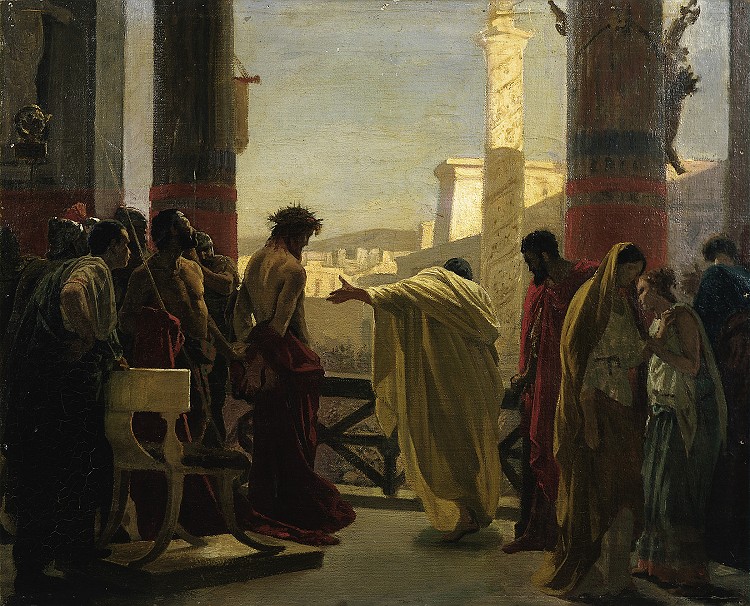
John Dickson in today's SMH. Picture by John Shakespeare from SMH 10 April 2009.

Thursday, April 09, 2009

Up on a Mountain Our Lord is Alone

Up on a mountain
Our Lord is alone

Without a family, friends, or a home
He cries, "Oo, oo, oo, will you stay with me?"
He cries, "Oh, oh, oh, will you wait with me?"

Up on a mountain
Our Lord is afraid
Carrying all the mistakes we have made
And He knew
It's a long way down
Do you know
It's a long way down?

Up in the heavens
Our Lord prays for you
He sends His spirit to carry us through
So it's true
That you're not alone
Do you know
He came all the way down?
So it's true
That you're not alone
Do you know
He came all the way down?
- The Welcome Wagon, Up on a Mountain. Listen here.

I've always been struck by the end of Tenebrae service on Maundy Thursday, when all the candles are snuffed out, the communion table stripped bear, the lights turned off and congregation leaves the building in darkness and silence. It mirrors the loneliness of Jesus in Gethsemane, and ultimately on the cross, when all his disciples have been scattered and fled, and the last Israelite - the true image of his Father - is cut off from the land of the living.

They Don't Sound Like Coldplay

Welcome to the Welcome Wagon was a delightful find for me last year, even though it took about two months after buying it to listen to it.

Welcome to the Welcome Wagon is the debut album of The Welcome Wagon, husband and wife team Vito and Monique Aiuto, and was produced by there friend Sufjan Stevens. In fact, the keen Sufjan fans out there might release that Vito is very same very for whom Vito's Ordination on Michigan was written for. Vito is the pastor of Resurrection Presbyterian Church a church he planted in Williamsburg, Brooklyn, NY, in 2005 (and I think is loosely connected somehow to Tim Keller).

One of the joys of WTTWW is that it is high quality amateur music. Although you can definitely hear the influence of Sufjan Stevens throughout the album (which isn't a bad thing), this is not two the work of two musical professionals. it is a husband and wife (and sometimes a choir) making music for the sake of making music. Indeed, the album took several years to produce and was done so across many different lounge rooms and bedrooms:
The Welcome Wagon began as husband and wife singing in the privacy of their home. Having little to no previous musical experience or training, Vito purchased a guitar with the desire to sing hymns with his family. With Monique accompanying on toy glockenspiel or harmonica, the two would amble through old hymnals, psalters and prayerbooks. Their inability to read music was no big issue; Vito simply made up new tunes to old words.
One of the other joys about WTTWW is that it's different to what a large segment of 'Christian music' sounds like. They are not another bunch of Christians trying to imitate Coldplay. "[T]his is precisely what sets them apart from the standard fare of contemporary liturgical music. It doesn't feign emotion; it doesn't pander to stylistic pretensions; it doesn't pretend to be anything other than what it is."

The first half of WTTWW is particularly good. With reflections on Jesus, Psalm 127, the crucifixion, WTTWW can be both moving and uplifting at the same time. The whole album has a good mix of original songs and covers for a new band, "from Old Testament psalms, to Presbyterian Psalters of the 17th century, to iconoclastic pop innovators of the 1960s (The Velvet Underground), to charismatic Catholics of the 1970s (Lenny Smith), and into the melancholy lovelorn pop of the 1980s (The Smiths)", and a mixture of religious and religious songs. Although I feel that WTTWW lost momentum in the last six songs, maybe it will grow on me, and overall this is generally a very good album. It also comes with a fantastic album design made up of old-school Sunday School postcards and original artwork by Monique Aiuto.

Welcome to the Welcome Wagon - I'd give it 5 out of 5. And over Easter, I'll post up some of their lyrics on hebel. For the very keen, you can listen to all the songs online and read a commentary on all of them by produce Sufjan Stevens here.

Wednesday, April 08, 2009

World Without End?

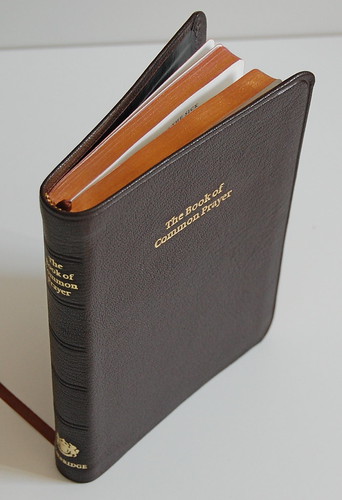
ALMIGHTY God, Father of all mercies, we thine unworthy servants do give thee most humble and hearty thanks for all thy goodness and loving-kindness to us, and to all men; [*particularly to those who desire now to offer up their praises and thanksgivings for thy late mercies vouchsafed unto them.] We bless thee for our creation, preservation, and all the blessings of this life; but above all, for thine inestimable love in the redemption of the world by our Lord Jesus Christ; for the means of grace, and for the hope of glory. And, we beseech thee, give us that due sense of all thy mercies, that our hearts may be unfeignedly thankful, and that we shew forth thy praise, not only with our lips, but in our lives; by giving up ourselves to thy service, and by walking before thee in holiness and righteousness all our days; through Jesus Christ our Lord, to whom with thee and the Holy Ghost be all honour and glory, world without end. Amen.

Can any one explain why 'world without end' has completely disappeared from our 'formal' and 'informal liturgy'? The only contemporary usage of that I can think of (besides Ken Follett) is a song by Christian ska band Five Iron Frenzy >>>Listen here.

Any ideas?


Picture from Flickr.

Thursday, March 19, 2009

Why Churches Die

A little while ago I 'reviewed' The Lost History of Christianity by Philip Jenkins. Jenkins has been interviewed on Christianity Today about the other of church growth - and why some churches die.

It's well worth a read, and you can find it here.

Here's an excerpt:

CT: Why does persecution sometimes strengthen a church and other times wipe it out?

PJ: The difference is how far the church establishes itself among the mass of people and doesn't just become the church of a particular segment, a class or ethnic group. In North Africa, it's basically the church of Romans and Latin-speakers, as opposed to the church of peasants, with whom the Romans don't have much connection. When the Romans go, Christianity goes with them.

But Christianity establishes itself very early as a religion of the ordinary, everyday people in Egypt as things get translated into Coptic. As a result, after almost 1,400 years under Muslim rule, there is still a thriving Coptic church that represents [perhaps] 10 percent of the Egyptian people—which I would personally put forward as the greatest example of Christian survival in history

AFES SALT: Resurrecting the Gospel

My article on the centrality of the resurrection in the apostolic gospel has been published in the Autumn AFES SALT magazine. I'm on page 10. Byron also has an article on Heaven: Not the End of the World.

If you don't already receive SALT, you can freely subscribe here.

And at some point I'll probably post my article on hebel.

Sunday, March 08, 2009

A Rant on the Current State of Church Services

Once upon a time, you could walk into any Anglican Church in the world and you would know exactly what was happening in the church service. For centuries the Anglican church around the world had followed the same pattern of liturgy and worship. All this changed in the twentieth century with the updating of language and customs - which was quite right given the great difference in language from the 1662 to the 1970's when the first modern Anglican prayer book was published in Australia. But since then the rate of revision had been rapid and astronomical. After three centuries of exclusive use of the Book of Common Prayer, the Diocese of Sydney (formally) went through 3 different prayer books in just 30 years. Besides this, many churches have moved to type of informalism for their services.

Many of these changes have been necessary to keep up with the development of Australian society over the past 50 years. But accompanying this has been a worrying tendency. It has become all to easy to throw out anything the is old, traditional or formal (i.e. the creeds, communion, confession) for the sake of informality. Informalism for the sheer sake of informalism is not a desirable thing. In fact, if anything, it has often resulted in church services that are half-baked, half-arsed, and run according to whim. In pursuit of the noble cause of being informal, our church services are reduced to cliche's and entertainment - the congregation has no idea what will come next and so are reduced to being an audience as they await the next move.

The other problem is that the pursuit of this highest ideal is that our informal services are often just as unintelligible and alienating as the liturgy that they replaced. I saw this problem in my old church. The theory was that no one in the town would step into church, but they would spend all their time in cafes. So turning the church service into a cafe seemed the obvious thing to do. Except that it was a poorly run cafe - why go to there when people go to a nice and comfortable cafe two doors up the road. Nor only did it fail misread to the culture, it also failed to serve the people actually at the church. And has been stated elsewhere:
'The reason we eschewed formality in church services was because that was what WE on the inside wanted (or some of us, anyway) - the missiological reason was in fact only a justification for it'
Of course formalism for the sake of formalism is also dangerous. One of the great strengths of Anglicanism has been it's quality to culturally contextualise it's form and identity to whatever situation it's in. The challenge we face in our contemporary liturgy is to provide church services that allow for spontaneity the relaxed felling that informal service provide, whilst not descending to pure laziness or rejecting good practices on the basis of how formal they are. Let's not throw the baby out with the bath water.

See also: Missiological assumptions?

Monday, March 02, 2009

Alpha Males and Church Leadership

Following up from my previous post, I want to nuance what I said about church planting in Sydney. We are quite prone to planting churches of one particular type - that is churches which are led by alpha males. If one of our churches starts falling behind, we parachute in one of these guys and expect their ability as a 'renaissance man' to turn everything around.

These men are typically assertive in their leadership, and can generally command the loyalty of their church by sheer force of personality. (To generalize even further, they are sporty - or at the very least are well built and handsome). You can see this in many of the leaders in our diocese. Rather than being the softly spoken kind of guys, these men are often seen at church holding court - they are the center of conversations, with younger guys hanging of their every word. And so the next generation of church leaders emulates the current crop of alpha males. They often come across as brash and assertive, and the next thing you know they are late to lectures because they're playing touch or cricket.

Remember too that the Apostle Paul was not a great speaker. He wasn't a great surfer, shuffle around in his designer clothes or have a tan to an enunciate his rugged good looks. Instead he was a poor speaker, ship wrecked and beaten a few times. It is in our weaknesses that He is strong.

I'm not saying that all our ministers are like this. There are many men in ministry who definitely aren't alpha males. They're scrawny and softly-spoken, and full power to them. But if we continue to plant churches where all the men are expected to be die hard rugby fanatics, then that is a significant portion of the population that we are marginalizing and excluding from our churches. We should not let one particular type of manhood become the exclusive picture of Christian maleness. Especially when it is already hard enough for men like this to fit into church.