By Adrian Lane.
Monday, May 24, 2010
Thursday, May 20, 2010
Doubting Jesus
"[G]iven that there are no contemporary references to Jesus while he was supposedly alive, we may even doubt his existence. There is not one mention of him in the many missives that passed from Palestine to Rome." Chris Gaffney (the Secretary of the Victorian Labor College), The Australian Rationalist (Spring, 2005).As John Dickson has pointed out, if Gaffney has discovered some missives that passed between Palestine and Rome, there are plenty of historian who would love to see them. Because there has been none found so far.
"Although Jesus probably existed, reputable biblical scholars do not in general regard the New Testament (and obviously not the Old Testament) as a reliable record of what actually happened in history, and I shall not consider the Bible further as evidence for any kind of deity." - Richard Dawkins, The God Delusion.Frustratingly, Dawkins doesn't reference any reputable biblical scholars. He does rely on G.A. Wells, who is probably the most famed academic to deny the existence of Jesus. And yet Wells had no background in history, let alone the history of Jesus. He is a professor in German!
Tuesday, May 18, 2010
Bauckham - The Canonicity of the Four Gospels
I just read a cracker of an article by Richard Bauckham on "The Canonicity of the Four Gospels" (and the lack there-of for the 'gnostic gospels). Here is part of what Bauckham has to say:"What we have in the four Gospels, in my view, is good access to the apostolic testimony about Jesus. I stress the term testimony. The eyewitnesses from whom these Gospels derive were not disinterested observers. They were involved participants in the events they later recalled and narrated. They were committed believers in the Jesus whose story they told. They and the Gospel writers were thoughtful interpreters of the significance of that story for human salvation. As we have noticed, all too briefly, they interpreted that significance very differently from the way the Gnostic Gospels do. But let me make two important points about this form of history – what I’m calling apostolic testimony. First, as we have seen, history matters to this testimony, as it does not for the Gnostic Gospels. It matters for the apostolic testimony that Jesus was a real participant in real history, and therefore it matters that the accounts are well based on the way the eyewitnesses told the story. The history is interpreted, of course, but it is history that it is interpreted. Secondly, the testimony of the eyewitnesses was in fact the kind of testimony that was valued by ancient historians – that of involved participants, people who could convey something of the reality of the events from the inside. It’s the kind of testimony we need if we are to grasp anything of the meaning of events as exceptional as those of which the four Gospels tell. We cannot and don’t have to polarize fact and meaning. The four Gospels give us at the same time both the most reliable access we have to what happened in the history of Jesus and also the meaning that those who were closest to Jesus and the events perceived in them when they found them to be life-changing revelation of God.I love the way Bauckham concludes this paper:
This inseparable combination of fact and meaning, history and interpretation that we have in the four Gospels qualifies them for the authority that these Gospels came to have for the mainstream church of the second and later centuries. Appropriately they came to be regarded as both the best access we have to the history of Jesus and the normative understanding of the significance of that history for Christian faith."
"I guess the question comes down to: is there a real Jesus, a Jesus who lived in first-century Palestine as well as being alive and accessible to believers today, and does it matter what sort of God this Jesus revealed? If the answers are yes, then I think we have to face the same unavoidable decision that the early church had to make between the Jesus of the four Gospels and his God, and the very different Jesus of the Gnostic Gospels and his god." - The Canonicity of the Four GospelsNow to use this for my AnCon seminar.
Saturday, May 15, 2010
Check it out
This is old news by now, but Ryan Smartt has starteda blog. As a high school Christian Studies teacher, the blog offers Ryan's relfections he shares Jesus in with his students. Right now Ryan is sneezing posts out for breakfast, so it's worth checking out his blog here: ryansmartt.wordpress.com.
Nat Swann has started blogging about her PhD over at nswann.wordpress.com.
The Evangelical History Association has a website. The EHA is really moving forward under the presidency of Meredith Lake, especially with the Divining the Past conference scheduled for July (which I've mentioned before here).
And for something different, I enjoy following the 52 suburbs blog, least of all for the photography: www.52suburbs.com.
Nat Swann has started blogging about her PhD over at nswann.wordpress.com.
The Evangelical History Association has a website. The EHA is really moving forward under the presidency of Meredith Lake, especially with the Divining the Past conference scheduled for July (which I've mentioned before here).
And for something different, I enjoy following the 52 suburbs blog, least of all for the photography: www.52suburbs.com.
Friday, April 16, 2010
The Peril of Postmodernism
"The peril of postmodernity is that of losing the capacity to be informed and transformed by God's Word; the promise of postmodernity is that of rediscovering aspects of God's Word that enable us to get wisdom rather than mere information." K Vanhoozer
Discuss
Sunday, April 04, 2010
Christ is risen from the dead: A Paschal Hymn
- Christ is risen from the dead,
- Trampling down death by death,
- And upon those in the tombs
- Bestowing life!
- Christ is risen from the dead,
- Trampling down death by death,
- And upon those in the tombs
- Bestowing life!
- Christ is risen from the dead,
- Trampling down death by death,
- And upon those in the tombs
- Bestowing life!
- Christ is risen from the dead,
- Trampling down death by death,
- And upon those in the tombs
- Bestowing life!
- From the Byzantine Rite.
Friday, April 02, 2010
The One Like a Lamb
"This is the one who like a lamb was carried off and like a sheep was sacrificed. He redeemed us from slavery to the cosmos as from the land of Egypt and loosed us from slavery to the devil as from the hand of Pharaoh. And he sealed us from our souls with his own Spirit and the lambs of our body with the his own blood. This is the one who covered death with his shame and made a mourner of the devil, just as Moses did Pharaoh. This is the one who struck lawlessness a blow and made injustice childless, as Moses did Egypt. This is the one who rescued us from slavery into liberty, from darkness into light, from death into life, from a tyranny into an eternal kingdom (and made us a new priesthood and a peculiar, eternal people)." - Melito of Sardis, On The Passover, circa 160 AD.
Wednesday, March 31, 2010
Dear God...
Monday, March 22, 2010
Defining Work

"Work is the stewarding of Gods creation under Christ's rule, requiring us to fill and subdue it, to care for it and enhance its fruitfulness so that humanity continues and prospers in God's world in communities of care." H/T Rowan Kemp.
Discuss.
Guest Post: On Martyrdom and Persecution
A Guest Post by Alison Moffitt


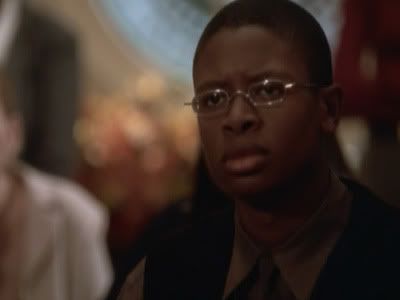
Student: Sir?
President Bartlett: Yeah
Student: Do you consider yourself a man of principle?
President Bartlett: I try to be
Student: Well... Don't you consider, I mean I know they're our enemy, but don't you consider there's something noble about being a martyr?
President Bartlett: A martyr would rather suffer death at the hands of an oppressor than renounce his beliefs. Killing yourself and innocent people to make a point is sick, twisted, brutal, dumb-ass murder.
I recently rewatched the West Wing episode produced just after the September 11 attacks in 2001. The episode is called Isaac and Ishmael. This scene, where a student quizzes President Bartlett on martyrdom, has really got me thinking. What does it mean to be a martyr? What is the 'proper' context in which to die for your faith? Is President Bartlett right?
Last year I went to a talk by Bishop Josiah A. Idowu-Fearon who was visiting Australia at the time. Bishop Fearon oversees the Diocese of Kanduna in Nigeria. It straddles the middle of country, the very volatile part where the predominantly Muslim north meets the predominately Christian South. It's a dangerous place. Religious tensions are mixed up with political and economic power, and are regularly expressed with violent physical attacks.
Speaking to a small audience of mainly Christian workers in Australia last year, Josiah Fearon talked about the difficulties of leading the church in a climate like this. Not only does the church feel threatened by reactive Muslims, but many members of the church believe that it is their duty to defend the honour of the church through avenging other injured Christians or even attacking Muslims who slander the church. Fearon clearly articulated his own stance: Christians follow a crucified Lord, who was insulted, oppressed, persecuted and killed. He told his followers to turn the other cheek and warned his followers that they would be abused just like him. Christians who feel like they must defend the honour of their religion through further violence, or even avenge the injury or death of family, are not following Jesus as they do these things.
Josiah Fearon's attitudes have made him the target of a few assassination attempts, not just by Muslim extremists but also by Christian extremists who think he is too soft in his approach. But I don't think he is being soft. I think it would much harder to take persecution 'lying down' than fighting back.
Although they speak about slightly different things, I'm inclined to think that Josiah Fearon would agree with Jed Bartlett on martyrdom, and Jed Bartlett would agree with Josiah Fearon on persecution (even though Jed Bartlett is fictional...). Martyrs die for their faith, but they don't kill innocent people. Persecution means enduring suffering and humiliation without ever seeking revenge, and Christians must never initiate violence.
Do you think this is the correct way to view things? Issues of violent persecution and martyrdom don't really come up in contemporary Australian society, but they definitely do right now in other places of the world. This week, 13 people were killed in a religious attack on a village outside Jos, one of the larger towns in Josiah Fearon's diocese. Most of them were women and children. Is it fair to say that the church should sit by and watch people get abused and killed? If you were a Christian leader, how would you seek justice if your local community was governed by sharia law? Would you take justice into your own hands?
P.S. Did anyone notice that Josiah Fearon and Jed Bartlett have the same first name?
UPDATE from Matt: Last year at CMS I was involved in interviewing Josiah Fearon. You can watch the interview here.
Student: Sir?
President Bartlett: Yeah
Student: Do you consider yourself a man of principle?
President Bartlett: I try to be
Student: Well... Don't you consider, I mean I know they're our enemy, but don't you consider there's something noble about being a martyr?
President Bartlett: A martyr would rather suffer death at the hands of an oppressor than renounce his beliefs. Killing yourself and innocent people to make a point is sick, twisted, brutal, dumb-ass murder.
I recently rewatched the West Wing episode produced just after the September 11 attacks in 2001. The episode is called Isaac and Ishmael. This scene, where a student quizzes President Bartlett on martyrdom, has really got me thinking. What does it mean to be a martyr? What is the 'proper' context in which to die for your faith? Is President Bartlett right?
Last year I went to a talk by Bishop Josiah A. Idowu-Fearon who was visiting Australia at the time. Bishop Fearon oversees the Diocese of Kanduna in Nigeria. It straddles the middle of country, the very volatile part where the predominantly Muslim north meets the predominately Christian South. It's a dangerous place. Religious tensions are mixed up with political and economic power, and are regularly expressed with violent physical attacks.
Speaking to a small audience of mainly Christian workers in Australia last year, Josiah Fearon talked about the difficulties of leading the church in a climate like this. Not only does the church feel threatened by reactive Muslims, but many members of the church believe that it is their duty to defend the honour of the church through avenging other injured Christians or even attacking Muslims who slander the church. Fearon clearly articulated his own stance: Christians follow a crucified Lord, who was insulted, oppressed, persecuted and killed. He told his followers to turn the other cheek and warned his followers that they would be abused just like him. Christians who feel like they must defend the honour of their religion through further violence, or even avenge the injury or death of family, are not following Jesus as they do these things.
Josiah Fearon's attitudes have made him the target of a few assassination attempts, not just by Muslim extremists but also by Christian extremists who think he is too soft in his approach. But I don't think he is being soft. I think it would much harder to take persecution 'lying down' than fighting back.
Although they speak about slightly different things, I'm inclined to think that Josiah Fearon would agree with Jed Bartlett on martyrdom, and Jed Bartlett would agree with Josiah Fearon on persecution (even though Jed Bartlett is fictional...). Martyrs die for their faith, but they don't kill innocent people. Persecution means enduring suffering and humiliation without ever seeking revenge, and Christians must never initiate violence.
Do you think this is the correct way to view things? Issues of violent persecution and martyrdom don't really come up in contemporary Australian society, but they definitely do right now in other places of the world. This week, 13 people were killed in a religious attack on a village outside Jos, one of the larger towns in Josiah Fearon's diocese. Most of them were women and children. Is it fair to say that the church should sit by and watch people get abused and killed? If you were a Christian leader, how would you seek justice if your local community was governed by sharia law? Would you take justice into your own hands?
Repay no one evil for evil, but give thought to do what is honourable in the sight of all.If possible, so far as it depends on you, live peaceably with all. Beloved, never avenge yourselves, but leave it to the wrath of God, for it is written: "'vengeance is mine, I will repay', says the Lord". To the contrary, "if your enemy is hungry, feed him; if he is thirsty, give hims something to drink; for by doing so you will heap burning coals on his head". Do not be overcome by evil, but overcome evil with good.
Romans 12:17-21
P.S. Did anyone notice that Josiah Fearon and Jed Bartlett have the same first name?
UPDATE from Matt: Last year at CMS I was involved in interviewing Josiah Fearon. You can watch the interview here.
Friday, March 19, 2010
Another Political Quote of the Week
Actually, this is from February.
"Homelessness is a choice." - Tony Abbott
This was Abbott's response to a question asking whether a government under his direction would continue with the Rudd government's goal of halving homelessness by 2020. It was also his reflection on Matthew 26.11.
Theological fail?
"Homelessness is a choice." - Tony Abbott
This was Abbott's response to a question asking whether a government under his direction would continue with the Rudd government's goal of halving homelessness by 2020. It was also his reflection on Matthew 26.11.
Theological fail?
Thursday, March 18, 2010
...mens eadem...
"Don't be conformed to this present evil age, but be transformed by the renewing of your mind..." - Romans 12.2
"The word of God was the sweat of [Paul's] brow, but it was also the life of his mind. Our juncture of history is rather like Paul's in one respect: it requires a Christian preacher to come to the defence of the life of the mind. As Universities daily conform themselves more closely to the school of wizardry in children's fiction, a repository of magic techniques to get startling effects, who else is left to care for how people, as individuals, think for themselves about the coherence of understanding, principle, and purpose that makes the difference between living in freedom and living in servitude? As the young flock in ever greater numbers to our Universities and colleges, who is there to talk to them seriously, and with all the resources of refined scholarly culture, about the meaning of their human existence, about how vast quantity if scatted or organised information can be distilled into something worth a humans being's while to be occupied with in his or her one and only venture in life? Of course, we shall be told that virtue cannot be taught, that the existential dimension of wisdom is something each person must discover for him or herself, not a topic for inclusion in a syllabus, to be "covered" in a tutorial. All of which is perfectly true. Yet wisdom can be present or absent as a goal and a horizon, before which everything covered in a syllabus can begin to assume its real importance. But this requires teachers who believe that learning is not simply perfecting a performance, but has to do with the terror and hope that is due to existence itself. It requires teachers who believe in the human reality of salvation and loss, who live out their academic roles as those who continually ask how they may be saved?" - Oliver O'Donovan, No End to the Word, The Word in Small Boats, 2010.
Tuesday, March 16, 2010
Quote of the Week by Lindsay Tanner
"[I'm] not really religious; I'm an Anglican.'' - Lindsay Tanner, Federal Finance Ministerh/t Alison
Monday, March 08, 2010
Peter Hitchens on faith and his brother
How I found God and peace with my atheist brother: Peter Hitchens traces his journey back to Christianity.
"Why is there such a fury against religion now? Because religion is the one reliable force that stands in the way of the power of the strong over the weak. The one reliable force that forms the foundation of the concept of the rule of law. The one reliable force that restrains the hand of the man of power. In an age of powerworship, the Christian religion has become the principal obstacle to the desire of earthly utopians for absolute power."
4 Quick Questions and 1 Strange one with...
Me. About my work with the EU and the Howard Guinness Project. Over at Jeremy's blog, Micaiah Sells Out...
Subscribe to:
Posts (Atom)