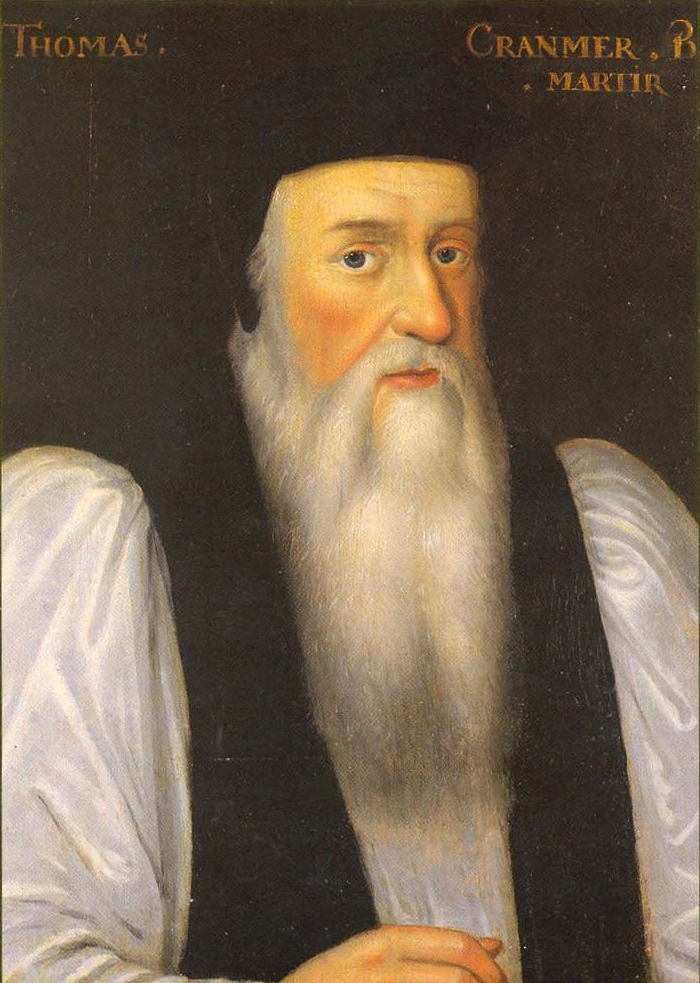
Showing posts with label cranmer. Show all posts

Wednesday, November 01, 2017

The Protestant Disposition

 #Reformation500 
I don't think I've ever felt more Protestant than when I was in Rome a few years ago. It wasn't the aesthetics of the Vatican, or anything like that. It was the knowledge that the buildings we were standing in had been paid for by the abuse of Christians in Germany and throughout Europe centuries earlier. 

It was confronting to see what the indulgences opposed by Martin Luther had actually paid for. It was confronting having come from Oxford (final photo) and seen the spots where Cranmer, Ridley, and Latimer had died in the backlash against the Reformation. 

Being Protestant means many things (i.e. the five solas), but I think it involves a certain disposition: holding together how precious Christian unity truly is, and how nefarious church corruption truly is. 

It involves the recognition that gospel faithfulness can be compromised by religious hypocrisy. 

It's the abhorrence of the scriptures being held captive, and the delight in seeing them set free to in the lives of ordinary women and men. 

To be Protestant means exposing sin to the light – beginning with our own – so that it can't fester in the darkness. 

#AllSaints

Tuesday, August 20, 2013

Body of Liturgy III

Humans are embodied creatures, who cannot be reduced to their mind, soul, or even belief. We are heart, soul, mind and strength. Following a Biblically informed anthropology, liturgy is able to minister to the whole-person by encouraging whole-bodied love for God. That is the argument of theological anthropologist James K.A. Smith; Christian liturgy is designed to minister to the whole person. Within corporate worship, liturgy deepens our imagination for the Kingdom: reading and teaching the word, prayer, confession and assurance, welcoming and hospitality, sending out, the ecclesiastical calendar and singing. Indeed, the call to worship in song follows the call of the Psalms to fulfill our vocation as humans who worship their creator (Psalm 95:6-7). Even in the sacraments, we are given a tangible enactments of the gospel, depicting God’s grace towards us in Jesus Christ.[1] Through touch and taste and sight, their rhythms remind us that we live by faith, remembering the past in anticipation of the future: “For as often as you eat this bread and drink the cup, you proclaim the Lord’s death until he comes” (1 Corinthians 11:26). Christian liturgy is formative because it is charged by the word and the Spirit in embodying the gospel.[2]
 
Christian liturgy invites us to taste and see that the Lord is good (Psalm 34:8). The liturgical habits of corporate worship, and the flow-on affect they have in the daily liturgies of the week, offer practices which are “dense” and charged with formative power through the Spirit. As Cranmer noted, these liturgies encourage “the most perfect and godly living”.[3] Insomuch as the life, death and resurrection of Jesus Christ is re-enacted through these habits, our hearts are also directed towards loving God and desiring his kingdom. The habits of corporate-worship are a guard against alternative secular-liturgies that also seek to from our hearts and desires.


[1] The same is true of Israel’s festivals outlined in Deuteronomy 16. See David Peterson, Encountering God Together: Biblical Patterns for Ministry and Worship (Nottingham: IVP, 2013), 63-66.

[2] Cf. James K. A. Smith, ‘Sanctification for Ordinary Life’, Reformed Worship 103 (March 2012), 20.


[3] Thomas Cranmer, ‘Of Ceremonies: Why Some be Abolished, and Some Retained’ in The Book of Common Prayer 1662 (Cambridge: Cambridge University Press, 2006), xii.

Tuesday, March 20, 2012

The Word of God is not Bound

"The word of God is not bound. God speaks, and the world is made; God speaks and the world is remade by the Word Incarnate. And our human speaking struggles to keep up. We need, not human words that will decisively capture what the Word of God has done and is doing, but words that will show us how much time we have to take in fathoming this reality, helping us turn and move and see, from what may be infinitesimally different perspectives, the patterns of light and shadow in a world where the Word's light has been made manifest. It is no accident that the Gospel which most unequivocally identifies Jesus as the Word made flesh is the Gospel most characterised by this same circling, hovering, recapitulatory style, as if nothing in human language could ever be a 'last' word. 'The world itself could not contain the books that should be written' says the Fourth Evangelist, resigning himself to finishing a Gospel that is in fact never finishable in human terms." - Rowan Williams, The Martyrdom of Thomas Cranmer - Sermon at Service to Commemorate the 450th Anniversary

Monday, July 27, 2009

What if...?

Diarmaid MacCulloch's Thomas Cranmer is a magisterial account of the great reformer and Archbishop. I read it in my first year of uni and it gave further fuel to a passion for Reformation history that I cultivated during high school. At the end of the book, MacCulloch speculates on what might happened had the reformers program for the English church continued beyond the death of Edward VI in 1553. It's not always helpful to engage in historical speculation, but MacCulloch's work has always stirred my imagination. Here is what how he thinks history may have panned out:
"What would the Church of England have looked like if, instead of Queen Mary's triumph, Queen Jane's quite reasonable hereditary claim to the throne had succeeded in establishing her regime? The Lady Mary would have had to have been effectively neutralized before Edward's death, and one fears the neutralizing her for good would have involved the block in a return to Henrician savagery. The Lady Elizabeth could have been married off to Lord Robert Dudley, a good catch for a royal bastard, and a good chance for them both of a happy love-match. Archbishop Cranmer, living to his allotted three score years and ten or beyond, could have produced the third version of his Prayer Book, in the light of friendly criticism from Continental reformers whom he respected, like Martyr, Bullinger, and Calvin; he would have been succeeded as Archbishop by Nicholas Ridley or Robert Holgate, with energetic young reformers like Edmund Grindal ready to make their mark and pick up good ideas from the best reformed churches of Europe. John Knox , mellowed by an increasing successful career in the Church of England would have been appoint Bishop of Newcastle, benevolently taking no notice of the advanced congregations in his diocese who received communion sitting; this was a practice in any case increasingly common throughout Jane's Church, despite Archbishop Cranmer's grumbles. The reform of canon law would have been achieved, the 1553 primer and catechism would have become standard, the Forty-Two Articles would have been unmodified by Elizabethan sacramentalist hesitations.

Out in the parishes, metrical psalms in the style of Geneva would quickly have spread: these were the best secret weapon of the English Reformation, making its public worship and private devotional practice genuinely popular throughout increasing areas of the kingdom. This congregational music music would have taken over in the cathedrals, now devoid of choirs or polyphony, and with their organs (where they survived) used mainly for entertainment, in the Dutch fashion. The conservative nobility would have continued the sullen public compliance which they had shown under Edward VI, their private celebration of ceremonial worship tolerated as eccentricity, like the Lady Elizabeth's patronage of choral music in her own chapel. The traditionalist higher clergy would have died off in senior Church offices and in the universities, with no possibility of like minded replacement: since the universities, with no major haemorrhage of exiles in the 1560's, the Jesuits and other religious orders would have found it difficult to recruit potential clergy to train for their attempt to treat Jane's England as a mission field. England would have become the most powerful political player in the Reformed camp, with Cranmer a cordial if geographically distant partner with John Calvin. There is a potent symbolism in the fact that it was Cranmer's son-in-law who translated Calvin's Institutes into English, and Cranmer's veteran printer who published it. With a Cranmer-Calvin axis, the profile of Reformed religion across the whole Continent would have been changed, and with the help and encouragement from Bishop Knox, the Reformation in Scotland might have followed a close path to that in the Reformed Church of England.

That is the history that never happened." - Thomas Cranmer, Diarmaid MacCulloch, pp 618-620.

Thursday, May 28, 2009

Good Books: The Answers

OK, here are my answers to the Good Books Meme. In case you've forgotten, here are the rules:

i. List a helpful book you've read in this category;
ii. Describe why you found it helpful; and
iii. Tag five more friends and spread the meme love.

Here goes:

1. Theology
I was introduced to theology when I was 15 years old by reading a compendium by Alistar McGrath. And I've loved theology ever since. The book I'm placing here is Karl Barth's Dogmatics in Outline. These were the first theological lectures given in Germany after WWII, with the text based off notes a student took as Barth was pretty much speaking off the top of his head. Despite the brevity of DIO, it has an urgency and compassion that has a powerful impact. It also taught me the phrase toho mobohu.

2. Biblical Theology
I won't hold back here - Climax of the Covenant by N.T. Wright is awesome. Focused on some key Pauline passages, Wright really bring to life God's plan to redeem his creation from evil through Israel and Jesus. I already had a framework for this through Goldsworthy and Dumbrell, but Wright's explanation of the narrative of scripture is par excellence.

3. God
Many Christians have profited over the past 50+ years from reading T.C. Hammond's In Understanding Be Men. But I found Colin Gunton's Act and Being to be really helpful in thinking through who God is and what language we should use to describe him. It particularly awoke me to all the Greek philosophical ideas that had creeped into Christianity.

4. Jesus
I loved Bauckham's God Crucified, and I'm tremendously excited about reading Jesus and the God of Israel. But, I'll have to go with N.T. Wright's Jesus and the Victory of God. This is a book that every evangelical Christian should read. This book fits together the picture the gospels present of Jesus and help us understand him and what he was all about. I'm not sure that any other book besides holy scripture has so thoroughly changed me and shaped me. If you haven't read it already, read this book.

5. Old Testament
Besides a whole heap of commentaries, I found Dumbrell's Faith of Israel helpful reading in understanding the whole Old Testament. Like Chris, Barry Webb's Five Festal Garments was another handy little book for me. As was David Peterson's Christ and his people in the book of Isaiah.

6. New Testament

I guess I can't use N.T. Wright again, so I'll go with Richard Bauckham's Jesus and the Eyewitnesses. I haven't finished it yet, but Bauckham has a depth of of knowledge and wisdom, and this comes to the fore in this wonderful book. And guess what - the gospels are actually based of eyewitness accounts, not just the ramblings from this different apostolic communities.

7. Ethics
Surprise, surprise...I'm going with Oliver O'Donovan's Resurrection and Moral Order. Tremendously helpful book in understanding that the starting point for evangelical ethics is the Lordship of Jesus Christ. But I'm going with this book because I found it incredibly hard. OOD is dense, and especially in Resurrection and Moral Order. But this book is filled with treasurer for those who have the patience to sift through and find it. The moral of this story is, keep reading hard books, even if you only take in half of it (or less).

8. (Church) History
I've read a bit of church history, and really appreciate the writing from people like MacCulloch, Noll, Bebbington, Norris, but I'm going to pick Rowan Williams short book Why Study the Past. Williams argument is that Christians have more reason than anyone else to do history well, because often it's a. our own history we are dealing with, and b. we're often engaging with our brothers and sisters in Christ down through the centuries. He also offers some helpful analysis of key historical moments, like the the reformation and the early church. An honourable mention goes to Philip Jenkins 'The Lost History of Christianity'.

9. Biography
I wish I read more biographies than I do. J.C. Ryle has some great little biographies on the leaders in the great awakening in England. But a biography I love and cherish is Diarmaid MacCulloch's Thomas Cranmer: A Life. This is probably the definitive history on England's reformer, and offers great insight not just into this tumultuous period of history, but also into this great man of faith.

10. Evangelism
One of the best books going here is John Dickson's Promoting the Gospel. But I'm going to pick John Chapman's Know and Tell the Gospel because it really is a quite simple book to read, and for the sake of sentimentality (this was the first Christian book I owned). Chapman has been greatly gifted as an evangelist, and has some wonderful insights. The only thing is that it might be quite dated now (the book is over 20 years old and Chapman himself was born in 1930) so for something more relevant to today read Dickson's book.

11. Prayer
This might sound weird, but as a kid in church, I found An Australian Prayer Book and the whole tradition behind (i.e. the BCP) really helpful for my prayers. (Reading the preface to both of these books helped too). It's Trinitarian and Chistological depth shouldn't be underestimated. Although being full of set, formal, liturgical prayers, I know how to pray to the Father, through the Son and in the Spirit because of it. It modeled prayer for me, and gave me a vocabulary to use in prayer.

Whoa, what an exercise. That took longer than I expected. I've already tagged my five, and well done to Byron, Chris, Steve, Duncan and Michael who've completed the meme (also Sam, Joe and Paul). Looking at this list makes we want to read more books by dead people. I might go do that.

Saturday, February 17, 2007

Anglicanism 7: What could have been

Diarmond MacCulloch dreams of the Church of England under Queen Jane Grey:

"What would the Church of England have looked like if, instead of Queen Mary's triumph, Queen Jane's quite reasonably hereditary claim to the throne had succeeded in establishing her regime? The Lady Mary would have had to have been effectively neutralized before Edward's death, and one fears that neutralizing before Edward's death, and one fears that her forr good would have involved the block, in a return to Henrician savagery. The Lady Elizabeth could have been married off to Lord Robert Dudley, a good catch for a royal bastard, and a good chance for them both of a happy love-match. Archbishop Cranmer, living his allotted three-score years and ten or beyond, could have produced the third version of his Prayer Book, in the light of friendly criticism from Continental reformers whom he respected, like Martyr, Bullinger and Calvin; he would have been succeeded as Archbishop by Nicholas Ridley or Robert Holgate, with energetic younger reformers like Edmund Grindal ready to make their mark and pick up good ideas from the best reformed churches of Europe. John Knox, mellowed by an increasingly successful career in the Church o Engkand, would have been appointed Bishop of Newcastle, benevolently taking no notice of the advanced congregations in his diocese who received congregation sitting; this was a practice in any case increasingly common throughout Jane's Church, despite Archbishop Cranmer's grumbles. The reform of canon law would have been achieved, the 1553 primer and catechism would have become the standard, the Forty-Two Article would have been unmodified by Elizabethan sacramentalist hesitations.
Out in the parishes, the meterical psalms in the style of Geneva would quickly have spread: these were the best secret weapon of the English Reformation making its public worship and private devotional practice genuinely popular throughout increasing areas of the kingdom. This congregational music would also have taken over in the cathedrals, now devoid of choirs or polyphony, and with their organs (where they survived) used mainly for entertaining for entertainmnet, in the Dutch fashion. The conservative nobility would have continued the sullen public compliance with religious change which they had shown under Edward VI, their private celebration of ceremonial worship tolerated ass eccentricity, like the Lady Elizabeth's patronage of choral music in her own chapel. The traditionalist higher clergy would have died off in senior Church offices and in the universities, with no possibility of like-minded replacement: since the universities produced no major haemorrahage of exiles in the 1560's, the Jesuits and other religious orders would have found it difficult to recruit potential clergy to train for their attempt to treat Jane's England as a mission field. England would have become the most powerful political player in the reformed camp, with Cranmer a cordial if geographically distant partner with John Calvin. There is a potent symbolism in the fact that it was Cranmer's son-in-law who translated Calvin's Institutes into English, and Cranmer's veteran printer who published it. With a Cranmer-Calvin axis, the profile of Reformed religion across the whole Continent would have been changed, and with the help and encouragement of Bishop Knox, the Reformation in Scotland might have followed a close path to that in the Reformed Church of England.
That is the history that never happened."

Friday, February 16, 2007

Anglicanism 6: Cranmer, or Laud, or...part ii

Cranmer and the "via media".

"Standing as he did in the developing Reformed tradition of Europe on the 1550's, Cranmer's conception of a 'middle way' or via media in religion was quite different from that of later Anglicanism. In the nineteenth century, when the word 'Anglicanism' first came into common use, John Henry Newman said of a middle way (before his departure for the Church of Rome) that 'a number of distinct notions are included in the notion of Protestantism; and as to all these all our Church has taken via media between it and Popery. Cranmer would violently have rejected such a notion: how: could one have a middle way between truth and Antichrist? The middle ground which he sought was the as Bucer's: an agreement between Winttenburg and Zurich which would provide a united vision of Christian doctrine against the counterfeit being refurbished at the Council of Trent. For him, Catholicism was to b found in the scattered church of the Reformation, and is was his aim to show forth their unity to prove their Catholicity."

Thomas Cranmer, Diarmaid MacCulloch, p. 617.

Monday, February 12, 2007

Anglicanism 5: Cranmer or Laud, or...part i

Well, having posted several quotes from the likes of Archbishop Williams and Bishop Ryle, and having re-read part of MacCulloch's work on Cranmer last night, I may have thought of a new way to look at the question of Anglican identity. It may just be that the answer lies, in part, in who we understand to be the true founders of "Anglicanism". From my own reflection, I think there are at least 3 possible sources for the legitimate Anglican identity.
Firstly, there is the 16th Century Anglicanism of Cranmer, Parker and Hooker. This is the Anglicanism of the Tudors, Henry VIII, Edward VI and Elizabeth I (not so much Mary I, because she had a tendency to burn them). This source is most likely to be termed "Classical Anglicanism", associated as it is with the Book of Common Prayer, the Ordinal and three orders, and the Articles of Religion. And it has been this source that has until recently influenced the direction of Anglicanism most.
Secondly, there is the Anglicanism of the early Stuart period - the Carolinian Church. This is where Archbishop Laud and his descendants in the High Church and Oxford Movements would feel most at home.
And thirdly, there is the Anglicanism influenced not so much by an English theologian or Lord of Cantur, but the Anglicanism imitating Calvin, and even Richard Baxter. Although not mutually exclusive form the first source, if not used well, this third source may ride rough shot of the first source.
There is potentially a fourth source in the various incarnations of liberal protestantism. And although this may claim to large (cashed up) sections of the Anglican Communion, I don't think it can hold a legitimate stake in Anglican identity.
Now all that is left to do is describe the three sources and try and determine which source is bona fide.