If you aren't a regular listener of the Pilgrim's Podcast, you might like to hear me be interviewed last Saturday. We ramble about blogging, CMS and many other things. You can listen here and here.
Or if Cross Stitching is more your thing, than you should check out my Mum's interesting blog. With a large international readership, it's quite successful.
Friday, June 19, 2009


Thursday, June 18, 2009
The End is Near
 Guest Post by Alison Moffitt
(My wife Alison handed in her last ever university assignment today. On her live journal she has been posting about the end of her time at uni. This is the seventh of these posts, which is about Vras, my former lecturer and employer.)
One of the best things about university has been the Assoc. Prof. Vrasidas Karalis. Here is a post about him.
"You are freaking me out!"
I'm going to say right out that Vras pretty much got me through my degree. My liberal studies degree required me to pass 5 semesters worth of a language. That sounded pretty straightforward after 5 years of Japanese at high school. I chose to study Modern Greek, because it would keep my grandparents happy and get me in touch with my cultural heritage etc, etc. I would not have passed Greek without Vras.
In first year I enrolled in beginner's Greek. We had two teachers - Martina, a lovely gentle but cool young teacher, and Vras, who appeared to me to be the pinnacle of insanity. Our first week was terrifying for me. Martina and Vras stood at the front of the class room trying to weed out the fluent speakers who were too good for beginners. I don't think they got them all. It felt like most of the class, even though they weren't fluent, could still understand Martina and Vras when they accidently slipped into complicated Greek. I spent that year sitting with my friend Amanda. The four hours with Martina were fine. She would give us worksheets, explain grammar to us, ask us questions that were at our comprehensions level. The last hour of the week was with Vras. He would charge into the classroom like a whirlwind, single out one of the girls:
"My, you're looking very radiant today!"
and then sit on a desk and proceed to rant about the evils of university bureaucracy, the politics of the local Greek community or the shortcomings of that year's Eurovision contestants. Vras never seemed to have a lesson plan. He would just tell outrageously hilarious or disturbing stories about his life and occasionally link them into our language study by translating the odd word into Greek and scrawling it across the chalkboard. Then he would ask a ridiculous question that was way beyond my Greek knowledge. Amanda and I would cower in the back row, hoping that he wouldn't call on us for an answer.
"Tell me you love..."
After about six or seven weeks of uni, Vras decided to teach us the verb agapo. which means love. Vras wondered around the room pointing randomly at students crying out "Tell me you love your mother!" "Tell me you love your father!". He got to me and paused. That day was one of the first days I had been brave enough to wear my EU shirt. "Tell me you love God!" I wasn;t really sure whether he was mocking me or giving me a chance to share my faith with people. Vras was proving to be a little bit obscure with matters of faith. He would tell very obscene stories and then turn around and talk about the New Testament Greek course that he ran after our class finished. He would tell stories about the time he went on a cruise and did lots of things that he found very pleasurable, and then tell one of the boys in our class in all earnestness that he should really read the book of Matthew in the bible, because it would be good for his soul.
"Forget about it"
At the end of the year I followed him up about the New Testament Greek course and summoned the courage to ask him if he was a Christian. Vras looked at me with surprise.
"Of course!"
"Oh. Why do you tell all of those stories?"
Vras paused and then answered (I think he was trying to be cryptic)
"Sometimes a dog's bark is worse than its bite".
Whatever that meant.
We talked for awhile and it turned out that Vras was potentially some kind of amazing heretic. He had been excommunicated from the Greek Orthodox church a couple of years beforehand and was struggling to renew his Greek passport. He sent me a copy of an article he had written, a very scathing history of the Greek Orthodox church. At the time he had decided instead to go the the Anglican church near where he lived in Glebe, although I'm pretty sure he has moved on from there. He doesn't like Calvinists, and most Anglicans in Sydney fall squarely into that category.
"Do you have a friend called Zoe?"
New Testament Greek the next year was an absolute scream. I started realising that Vras had different personas depending on who he was teaching. He still liked stirring people up and freaking people out, but this time, in front of Christians, his weapon of choice was not explicit sex stories but outrageous heresy. Most of what he said went way over my head, but Matt was in that class with me, as well as our friend Ryan and both of them are very keen amateur theologians. They would push back on every point they didn't like, and also some that they just enjoyed arguing over. My friend Dan was also in that class with me. He would try to speak up too, although is preferred method of voicing his opinion was to try and answer every and any question that Vras asked of the class.
Vras' favourite method for teaching vocab was to help us link the Greek word with their English words. So, classes went something like "The word for light is phos! Do you know any English words that come from phos? Yes! Photography". Or like "The word for earth is ygis. Do you know any English words that come from ygis? Yes! Geology, Geography." Or "The word for life is zoe. Do you have a friend called Zoe?". Yes, I did, but I didn't have any friends called Thanatos, which means death.
What a difference a year made. Instead of hiding at the back that year, it was a real joy to answer Vras' questions. I was much less self conscious. Dan kept a score sheet of who volunteered the most answers or comments. If you answered a question really well, Vras would reward you with
"Ryan, you are a star."
It was the highest compliment you could receive, until one day, after a very intense round of questioning, Dan was rewarded with
"Dan, you are a constellation!"
It was during that year that Matt and I started going out and eventually got engaged. Matt used to tie my shoelaces to the desk during Vras' lectures.
The outrageous stories kept coming. His favourite one to retell was about the time that he was in Iceland and was so very depressed that he wanted to kill himself. But then he went for a walk and found a little Greek Orthodox church in the middle of nowhere, with some monks or priests inside who talk to him and made him feel better. My favourite story he often told was about his days as a student in Germany. He studied under Joseph Ratzinger (you may know him now as Pope Benedict XVI) and he would recount the theological arguments that they had. I thought it was sweet being taught by a man who has fought with the pope.
"This is off the planet."
Now even the smartest of men must have his point of weakness. For Vras it was PowerPoint software. He didn't really start using it until I took the New Testament subjects, and once he started there was no return. Every week he had learnt a new function or found a cooler template. Every week there were shouts of frustration as, once again, the PowerPoint slides had mangled his Greek text into a whole lot of boxes and squiggles. I think to this day he still hasn't realised that it is not PowerPoint's fault but the fault of the university computers that don't have his Greek font installed. But I digress. One week he had discovered the transition technique where each letter comes up one by one and every letter spins a cartwheel before settling on the screen. It took a while to get through the slides that day. We would score extra marks for including the maximum number of pictures during our tutorial presentations.
"Now I know most of you were only born a few years ago, but some of you might remember what happened in 1396."
And so it went on and on. Matt got a short gig being his research assistant, and I enrolled and enrolled and enrolled in Vras' classes, eventually passing enough MGRK courses to get my degree! Plus more to spare. Byzantium: Between East and West. Greeks in the Diaspora. Greece and the European Imagination. They all rocked, and we would spend countless hours watching B-Grade Greek films, reruns of Acropolis Now and video clips from aging Greek film stars.
"How very Freudian!"
This year one of my classmates took two hours to get through her presentation. She was analysing the representation of Greece in the musical Mamma Mia. Each time she showed us a section of dialogue of the movie, Vras would insist that we continued watching to the next song.
"Ooh! I love this one! Gimme Gimme Gimme a man after midnight! Madonna sang this one too you know."
So I will really miss being in his classes. Even though I have absolutley no memory of a structured class with Vras, he has been one of the most influential and interesting teachers I've had. I may not know how to speak Greek and I may have forgotten a lit of information about Justinian and Homer, but I have really come to appreciate the things you can learn when you question things that are assumed. Vras was very good at getting us to do that. One of the people in his appreciation group on facebook put it this way:
"He knows full well that the best way to teach someone is to get them laughing."
To sum up, I thought I'd leave you with some of the hilarious quotes that have been collected on Facebook. Enjoy!
15 min into our exam, Vras says "Are you all finished yet?" then pushes clock forward - "Don't ask me any questions I'm conversing with Plato..."
"Those Egyptians were very nasty people! They killed and raped and ate the human flesh and blood! They were cannibals! Have you tasted human flesh?" [to an Egyptian student]
"Have you read 'War and Peace' by Leo Tolstoy...? You haven't?! Oh my goodness people, we don't live in a vacuum!"
"You have to be nice to me because I'm writing my magnus opus on violence so I need affection people!"
"The purpose of an institution like university is to produce intellectual disability"
"Look at your shoes...you can jump to your death from them" (said to a student with high heels).
Student (vehemently): The Greeks gave the light of civilization to the world! (ta fota tou politismou).
Vras (deadpan): Was it Philips or General Electric type lights?
"Justinian loved building walls around things...no doubt as a psychological reaction to his wife who was having sex with half the Empire"
(while talking about sex, Vras stops and looks at a student)
Vras: How old are you?
Student: 19
Vras: You look 14.
(someone tries to start up the sex topic again)
Vras: please, not in front of the minor.
"Elate paidia. Sit closer. Konta! Konta! I don't bite, I don't eat human flesh anymore!"
"Don't you have a friend called Theodora or Zoe?"
"Do you have a friend called Thanatos?"
Sunday, June 14, 2009
Six Principles on Reading
 Here are some principles for Christians on reading:
- Read the Bible. And pray that the Word of God would dwell richly amongst us as we "read, mark, learn and inwardly digest" the scriptures.
- Read theology. I despair sometimes at people who simply refuse to read theology. Whilst no substitute for scriptural reading, good books provide a grounding in Christian knowledge and living. And reading these books introduces to a language that you would otherwise be excluded from.
- Read widely. Their is a treasure trove of wealth out there...sitting here in my lounge room I'm surrounded by some pure gold on my bookshelves. But it can be very easy to fall into a pattern of reading books only from a select few publishers or authors. I know, I've done it myself (and if I was still doing it I would never of read some of these books). It is important to read books that come from a variety of traditions and ideas. Because we don't read books so that we can tick them off as confirming to our theology. No way. We read books to grow in our love and knowledge and service of Jesus, his people and his world. Which means that we even read book by authors that we strongly disagree with, taking the ideas that are good and right whilst rejecting what's wrong.
- Related to this, we need to make sure we read books written by dead people. Right now is an exciting time to be alive as a Christian, with such a globally vivid Christian publishing world. But there are many good books written decades, centuries and millennia ago. To not read the writing of Ryle, Wesley, Calvin, Anselm, Augustine, Athanasis, Ireneaus etc. not only drowns out the voice of the church down the centuries, it silences our brothers and sisters through time. And ultimately you're robbing yourself of the wisdom they have to offer. The advice C.S. Lewis gave was to read one contemporary book, followed by an older book written by some now dead.
- Don't stop reading fiction. Being culturally engaged means reading great novels, because it is through fiction that society spreads an ideas and thinks through concepts. According to Kim Fabricius over at Ben Myer's blog, a great novel is a "resource for moral and spiritual formation...with its enchantment of the everyday, whether tragic or comic; its discernment of the sacred in the secular; its disinterested rather than pragmatic take on human existence; its purposive narrative structure and focus on character, virtuous and vicious. You might say that if literature without theology is empty, theology without literature is blind."
- Remember, keep feeding your heart and imagination as well as your head. These are not distinct, but neither are they identical. (h/t Byron)
Is there anything I've missed? What would you add? I don't think that this is a principal, but something that I've found really helpful over the years is to read in community (i.e. book clubs, reading groups). They've been really insightful and formative for me.
Friday, June 12, 2009
A Vision For Christian Theology and Life
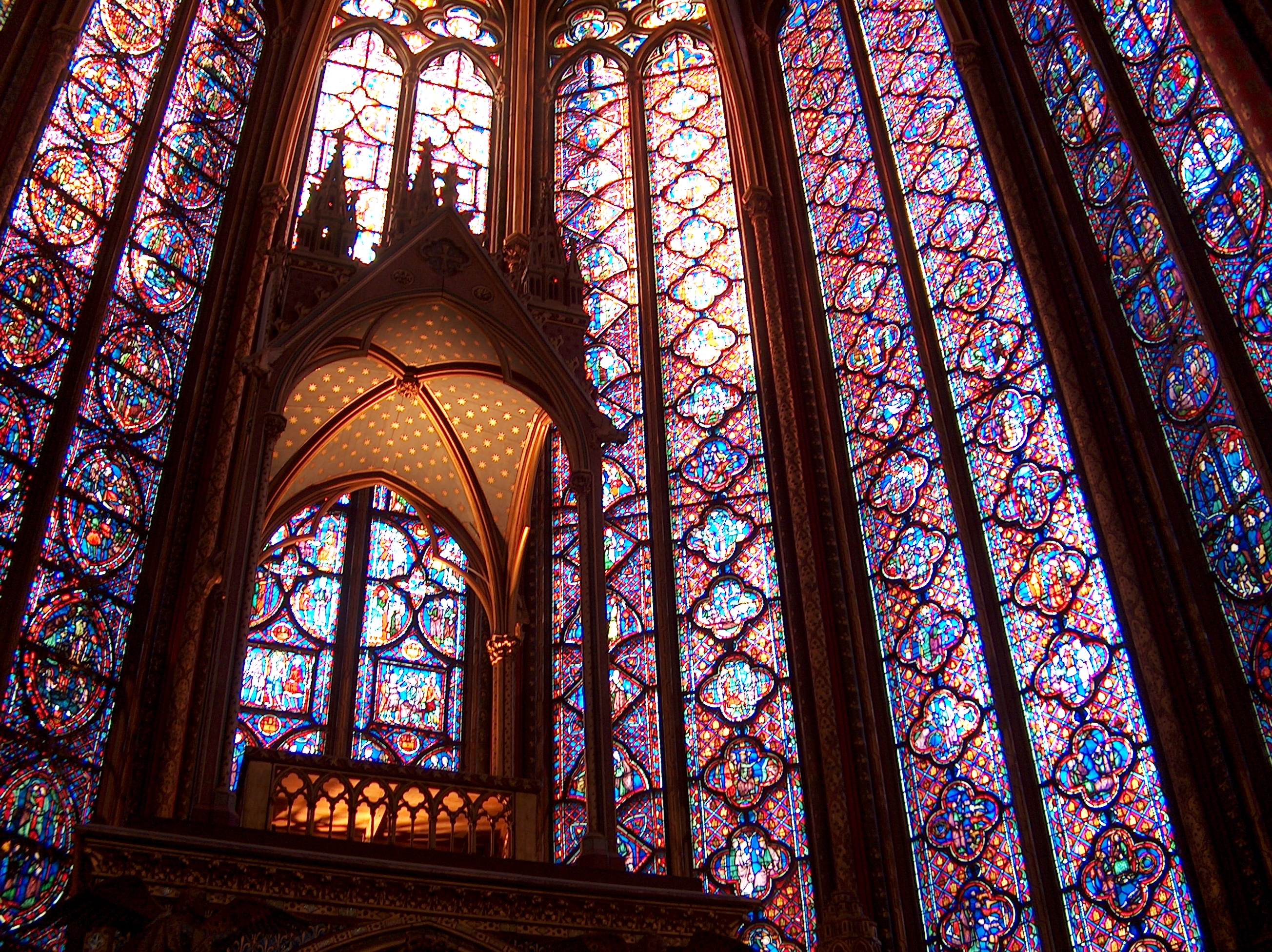
"...a faith that is bigger and deeper than "Jesus saves": trinitarian in basis, christological in focus, cosmic in scope, graciously ethical in direction, generous in difference and with a resurrection hope." - Byron Smith
I find this to be a quite apt and exciting description of how my theology and life should be shaped.
Tuesday, June 09, 2009
Question: ecclesia reformata...
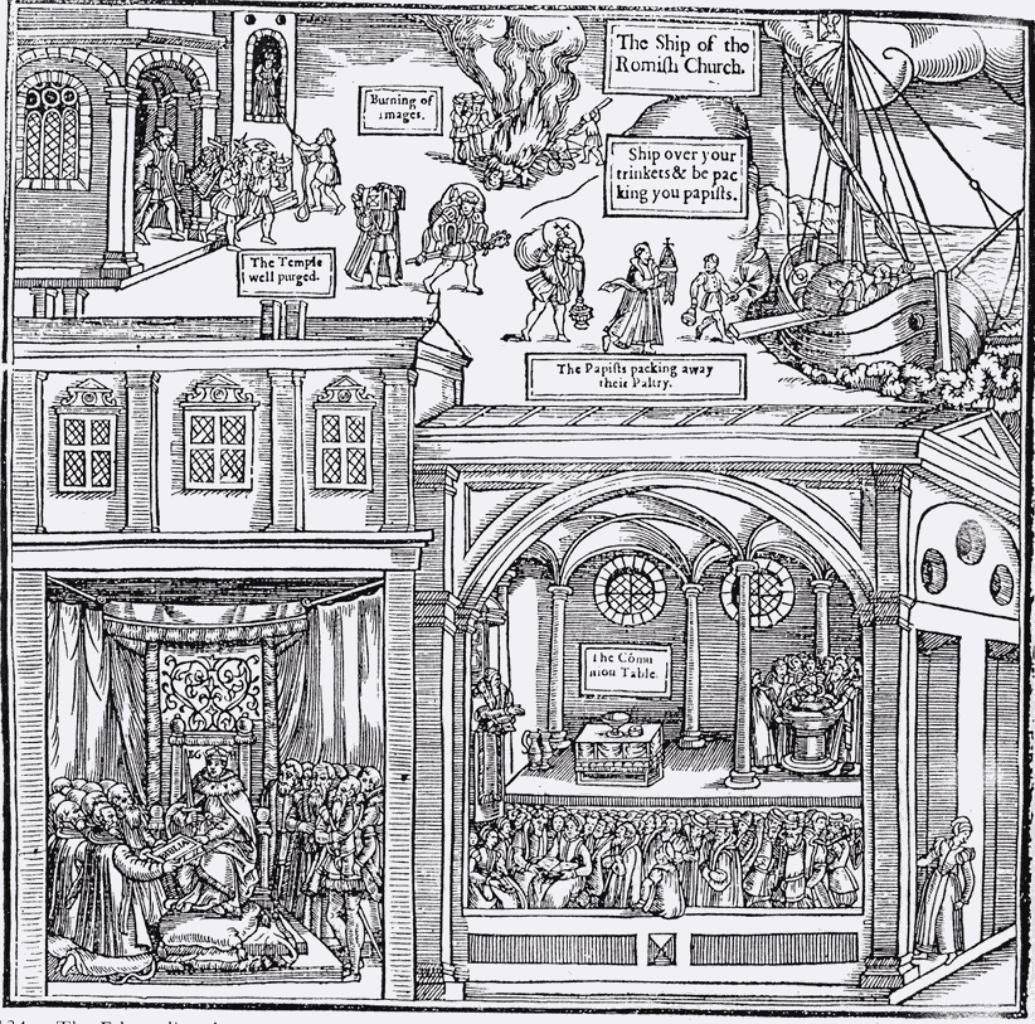 Question: does any one where the phrase 'ecclesia reformata est semper reformanda' come from? I've searched for it in Google, but couldn't find a source, although some people would argues it originates from the 17th century.
Often translated as 'reformed and always reforming', I have heard it used as a justification for change in church: "The reformers strongly believed in 'reforming and always reforming' as their heirs, we want to make that true today...so we're going to replace the pews with comfy chairs." (On this issue refer to MPJ).
Since so much weight has been given to this statement, it would be nice to now where it came from.
Also, if we're going to throw this idea around, it would be worth quoting it in it's entirety: ecclesia reformata est semper reformanda secundu Verbum Dei. Church always needs to be shaped by the Word of God, and if we forget this, then I can easily see ecclesia reformata est semper reformanda used to justify a whole range of culturally releveant but biblically prohibited things in church. Think about it.
Friday, June 05, 2009
Public Meeting Friday X
 In recognition of Sunday being Trinity Sunday, this week's Public Meeting talk is Peter Jensen's 'This We Believe: The Trinity'. This was part of the EU's Book of the Year series in 2005 of talks on the EU's doctrinal statement. The 'This We' Believe' series was also part of the EU's 75th anniversary celebration.
The talk itself was great (although it did seem strangely familiar to anyone who has done Doctrine 1 in Moore's correspondence course). However, the recording is pretty dodgy...if you know of a way to fix it, please let me know.
Enjoy (if you have ears to endure):
This We Believe: The Trinity
Friday, May 29, 2009
Public Meeting Friday IX
 Well, this is late, but there are still a few minutes of Friday left. The talks this week in PM Friday are some of the best talks ever given at EU. In three magisterial talks, Andrew Katay explores the key Christian characteristics (virtues?) of faith, hope and love. Enjoy:
These Things Remain: Faith
These Things Remain: Hope
These Things Remain: Love
"But since we belong to the day, let us be sober, having put on the breastplate of faith and love, and for a helmet the hope of salvation." 1 Thessalonians 5.8, one of many New Testament verses that speak of faith, hope and love.
Thursday, May 28, 2009
Good Books: The Answers
 OK, here are my answers to the Good Books Meme. In case you've forgotten, here are the rules:
i. List a helpful book you've read in this category;
ii. Describe why you found it helpful; and
iii. Tag five more friends and spread the meme love.Here goes:
1. Theology
I was introduced to theology when I was 15 years old by reading a compendium by Alistar McGrath. And I've loved theology ever since. The book I'm placing here is Karl Barth's Dogmatics in Outline. These were the first theological lectures given in Germany after WWII, with the text based off notes a student took as Barth was pretty much speaking off the top of his head. Despite the brevity of DIO, it has an urgency and compassion that has a powerful impact. It also taught me the phrase toho mobohu.
2. Biblical Theology
I won't hold back here - Climax of the Covenant by N.T. Wright is awesome. Focused on some key Pauline passages, Wright really bring to life God's plan to redeem his creation from evil through Israel and Jesus. I already had a framework for this through Goldsworthy and Dumbrell, but Wright's explanation of the narrative of scripture is par excellence.
3. God
Many Christians have profited over the past 50+ years from reading T.C. Hammond's In Understanding Be Men. But I found Colin Gunton's Act and Being to be really helpful in thinking through who God is and what language we should use to describe him. It particularly awoke me to all the Greek philosophical ideas that had creeped into Christianity.
4. Jesus
I loved Bauckham's God Crucified, and I'm tremendously excited about reading Jesus and the God of Israel. But, I'll have to go with N.T. Wright's Jesus and the Victory of God. This is a book that every evangelical Christian should read. This book fits together the picture the gospels present of Jesus and help us understand him and what he was all about. I'm not sure that any other book besides holy scripture has so thoroughly changed me and shaped me. If you haven't read it already, read this book.
5. Old Testament
Besides a whole heap of commentaries, I found Dumbrell's Faith of Israel helpful reading in understanding the whole Old Testament. Like Chris, Barry Webb's Five Festal Garments was another handy little book for me. As was David Peterson's Christ and his people in the book of Isaiah.
6. New Testament
I guess I can't use N.T. Wright again, so I'll go with Richard Bauckham's Jesus and the Eyewitnesses. I haven't finished it yet, but Bauckham has a depth of of knowledge and wisdom, and this comes to the fore in this wonderful book. And guess what - the gospels are actually based of eyewitness accounts, not just the ramblings from this different apostolic communities.
7. Ethics
Surprise, surprise...I'm going with Oliver O'Donovan's Resurrection and Moral Order. Tremendously helpful book in understanding that the starting point for evangelical ethics is the Lordship of Jesus Christ. But I'm going with this book because I found it incredibly hard. OOD is dense, and especially in Resurrection and Moral Order. But this book is filled with treasurer for those who have the patience to sift through and find it. The moral of this story is, keep reading hard books, even if you only take in half of it (or less).
8. (Church) History
I've read a bit of church history, and really appreciate the writing from people like MacCulloch, Noll, Bebbington, Norris, but I'm going to pick Rowan Williams short book Why Study the Past. Williams argument is that Christians have more reason than anyone else to do history well, because often it's a. our own history we are dealing with, and b. we're often engaging with our brothers and sisters in Christ down through the centuries. He also offers some helpful analysis of key historical moments, like the the reformation and the early church. An honourable mention goes to Philip Jenkins 'The Lost History of Christianity'.
9. Biography
I wish I read more biographies than I do. J.C. Ryle has some great little biographies on the leaders in the great awakening in England. But a biography I love and cherish is Diarmaid MacCulloch's Thomas Cranmer: A Life. This is probably the definitive history on England's reformer, and offers great insight not just into this tumultuous period of history, but also into this great man of faith.
10. Evangelism
One of the best books going here is John Dickson's Promoting the Gospel. But I'm going to pick John Chapman's Know and Tell the Gospel because it really is a quite simple book to read, and for the sake of sentimentality (this was the first Christian book I owned). Chapman has been greatly gifted as an evangelist, and has some wonderful insights. The only thing is that it might be quite dated now (the book is over 20 years old and Chapman himself was born in 1930) so for something more relevant to today read Dickson's book.
11. Prayer
This might sound weird, but as a kid in church, I found An Australian Prayer Book and the whole tradition behind (i.e. the BCP) really helpful for my prayers. (Reading the preface to both of these books helped too). It's Trinitarian and Chistological depth shouldn't be underestimated. Although being full of set, formal, liturgical prayers, I know how to pray to the Father, through the Son and in the Spirit because of it. It modeled prayer for me, and gave me a vocabulary to use in prayer.
Whoa, what an exercise. That took longer than I expected. I've already tagged my five, and well done to Byron, Chris, Steve, Duncan and Michael who've completed the meme (also Sam, Joe and Paul). Looking at this list makes we want to read more books by dead people. I might go do that.
Wednesday, May 27, 2009
Good Books: A Meme
 In an effort to help further the Christian blogging community, I'm starting a meme. I'm going to give you a list of theological book categories. Here are the AMENDED rules:
 i. List a helpful book you've read in this category;
ii. Describe why you found it helpful; and
iii. Tag five more friends and spread the meme love.
Here are the categories (in no paricular order):
1. Theology
2. Biblical Theology
3. God
4. Jesus
5. Old Testament
6. New Testament
7. Morals
8. (Church) History
9. Biography
10. Evangelism
11. Prayer
I'm going to go and think about my answers, but in the mean time I'll tag Steve, Duncan, Chris, Byron, Michael and you.
Here are the categories (in no paricular order):
1. Theology
2. Biblical Theology
3. God
4. Jesus
5. Old Testament
6. New Testament
7. Morals
8. (Church) History
9. Biography
10. Evangelism
11. Prayer
I'm going to go and think about my answers, but in the mean time I'll tag Steve, Duncan, Chris, Byron, Michael and you.
Tuesday, May 26, 2009
No Fear in Love

...love casts out fear...
This verse has been running through my head for about a week and a half. I had the pleasure of hearing Bishop Josiah Fearon from Kaduna Diocese Nigeria, speak about Gospel Ministry in Areas of Strife: The Interface of Christianity and Islam. Kaduna is in northern Nigeria, and if you know anything about that country, you’ll know that the north has been the scene of religious tension for many years now between Muslims and Christians. Bishop Fearon explained that this goes back to the establishment of Nigeria as an independent nation in the 1960’s. At that time the population was made up quite sizable populations of Christians and Muslims, and a fair number of traditionalists at well. Southern Nigeria is the home for Christians, and northern Nigeria is the home for Muslims. But over the last 50 years the Christian population in the north has been steadily growing, so that in Kaduna Diocese today, Christians now slightly outnumber the Muslims. This change in demographics has only heightened the tension between the tow religious communities – the Muslims who want to enforce the constitutionally recognized sharia law; and the Christians who want to use their new found majority to free themselves for the yoke of Islam. This is the main tension in Kaduna. But Bishop Josiah helpfully explained that these tensions are often used to exploit local and tribal conflict. A religious crisis may begin when Muslim and Christian farmers have land next to each other, and the Muslim farmer’s cattle enter the Christian’s lands. This is then spun out as a religious conflict between the two religions. And 10 years ago this would have resulted in violent clashes throughout the diocese, often causing fatalities.

The result of all this is fear – fear of the religion, and fear of the people. Bishop Josiah said that this has led to a genuine hatred and resentment towards Muslims by Christians. However, his approach is to promote ‘friendship evangelism’. He engages in dialogue, and is not afraid to build friendships with Muslims. He sees himself as having been called by God to evangelize his Muslim neighbours. So he tries to love, rather than shouting them down with doctrine as some of his colleagues prefer to do. And he has copped flack for this from inside and outside his diocese. He shared the story that during the major sharia crisis around 2001, some young members of his clergy had really had enough of his evangelism approach. And so they planned to assassinate him and blame it on the Muslims! Miraculously they were stopped on the day they set out to do this dreadful deed.
And so I was reminded that ‘there is no fear in love, but perfect love casts out fear’. Sitting in a church hall in the Georges River Region of Sydney, with several mosques within walking distance, (within close proximity of several Anglican churches that 50 years ago were the largest in the diocese but are now empty), I was reminded again that Jesus is so powerful, so magnificent, that I do not have to be afraid with Muslims; out of love I can share with them the Lordship of Jesus in my deeds and words.

The talk was recorded, and if you would like a copy you can email me at work. CMS also interviewed Bishop Josiah earlier that day, and that will released soon – stay tuned. Josiah Fearon is an international expert on Islam. Besides his degrees in Nigeria, he has postgraduate studies in theology (Durham), Islamic Theology (Birmingham), Arabic (Jordan) and a Doctorate of Ministry (Hartford). He has recently completed his time as the Archbishop of the province of Kaduna, was on the Eames commission that produced the Windsor Report, and is a licensed preacher at Canterbury Cathedral.
PS This post by Byron is also relevant to this discussion - it's not just our African brethren who are afraid of Islam.
Sunday, May 24, 2009
Read The Bible II
 More from Oliver O'Donovan's latest lecture, The Reading Church: Scriptural Authority in Practice:
“No collective spiritual exercise, no sacrament, no act of praise or prayer is so primary to the catholic identity of the church gathered as the reading and recitation of Scripture. It is the nuclear core. When Paul instructed his letters to be passed from church to church and read, it was the badge of the local church’s catholic identity. This is not to devalue preaching, praise, prayer, let alone sacramental act; these all find their authorisation in reading. As we know from St Thomas Aquinas, the act of breaking bread and sharing wine is not a Eucharist unless the narrative of the institution at the Last Supper is read.”This reminds me of something Ian Powell said in a talk several years ago. The most important thing we do at church (besides meet with Jesus) isn't the music, or the supper, or even the sermon. The most important thing we do is to hear God's word. So pay attention.
But here's a question. We read far less of the scriptures in church then our brothers and sisters did a 100 years ago. And it seems as though many Christians today read far less of the bible then they would have a 100 years ago, even a generation ago. Is there any connection between the two?
Garage Hymnal: My Father's World

This is my Father's world. O let me ne'er forget
That though the wrong seems oft so strong, God is the ruler yet.
This is my Father's world: the battle is not done;
Jesus who died shall be satisfied,
And earth and heaven be one.
Garage Hymnal have released a new album, the self titled Garage Hymnal (their third...unless you count the album distributed by the then SUEU Ancon band called Garage Hymnal). I won't comment on the musical abilities of the album - despite my ten years on brass instruments in the Blue Mountains City Band - but track number 10, Father's World, is an awesome song. Here it is in it's entirety (according to the Book of Common Praise 1947):
This is my Father's world, and to my listening earsAll nature sings, and round me rings the music of the spheres.This is my Father's world: I rest me in the thoughtOf rocks and trees, of skies and seas;His hand the wonders wrought.This is my Father's world, the birds their carols raise,The morning light, the lily white, declare their Maker's praise.This is my Father's world: He shines in all that's fair;In the rustling grass I hear Him pass;He speaks to me everywhere.This is my Father's world. O let me ne'er forgetThat though the wrong seems oft so strong, God is the ruler yet.This is my Father's world: the battle is not done;Jesus who died shall be satisfied,And earth and heaven be one.
h/t to the OC Supertones and NT Wright for introducing me to the song.
Friday, May 22, 2009
Public Meeting Friday VIII
 This week for PM Friday, I won't be recommending any one particular PM talk. Instead, I want to let you know that you can sign up for all the great EU PM talks via podcasting here.
Go and check it out.
Williams on the Ascension
 Following on from yesterday's post, here is a quote from Rowan Williams on the ascension:
"This is the transition that Ascension Day marks … it’s the moment when Jesus ‘goes away’, stops being an object we concentrate on in itself, and yet becomes more deeply and permanently present: ‘I am with you always, to the end of time.’ He is with us as the light we see by; we see the world in a new way because we see it through him, see it with his eyes." - Rowan Williams, Open to Judgement, p 82.h/t Chris Swann who has some excellent comments related to this quote.
Thursday, May 21, 2009
Calvin on the Ascension
 Today is Ascension Day, the church's celebration of Jesus' real absence from us because he is ruling all creation from his Father's right hand. It's also a public holiday in Vanuatu, Indonesia (!) , and the highly secularised European nations of: France, Sweden, Belgium, Austria, Germany, Switzerland, Denmark and the Netherlands. Anyway, here is some gold from Calvin:
"Christ in whom the Father wills to be exalted and through whose hand he wills to reign, was received at God’s right hand. This is as if it were said that Christ was invested with Lordship over heaven and earth, and solemnly entered into possession of the government entrusted to him -and that he not only entered into possession once and for all, but continues in it, until he shall come down on judgment day… both heavenly and earthly creatures may look with admiration upon his majesty, be ruled by his hand, obey his nod, and submit to his power." - John Calvin, Institutes of the Christian Religion, Book II Ch XVI 15
Subscribe to:
Posts (Atom)